What is a Video Management System (VMS)?
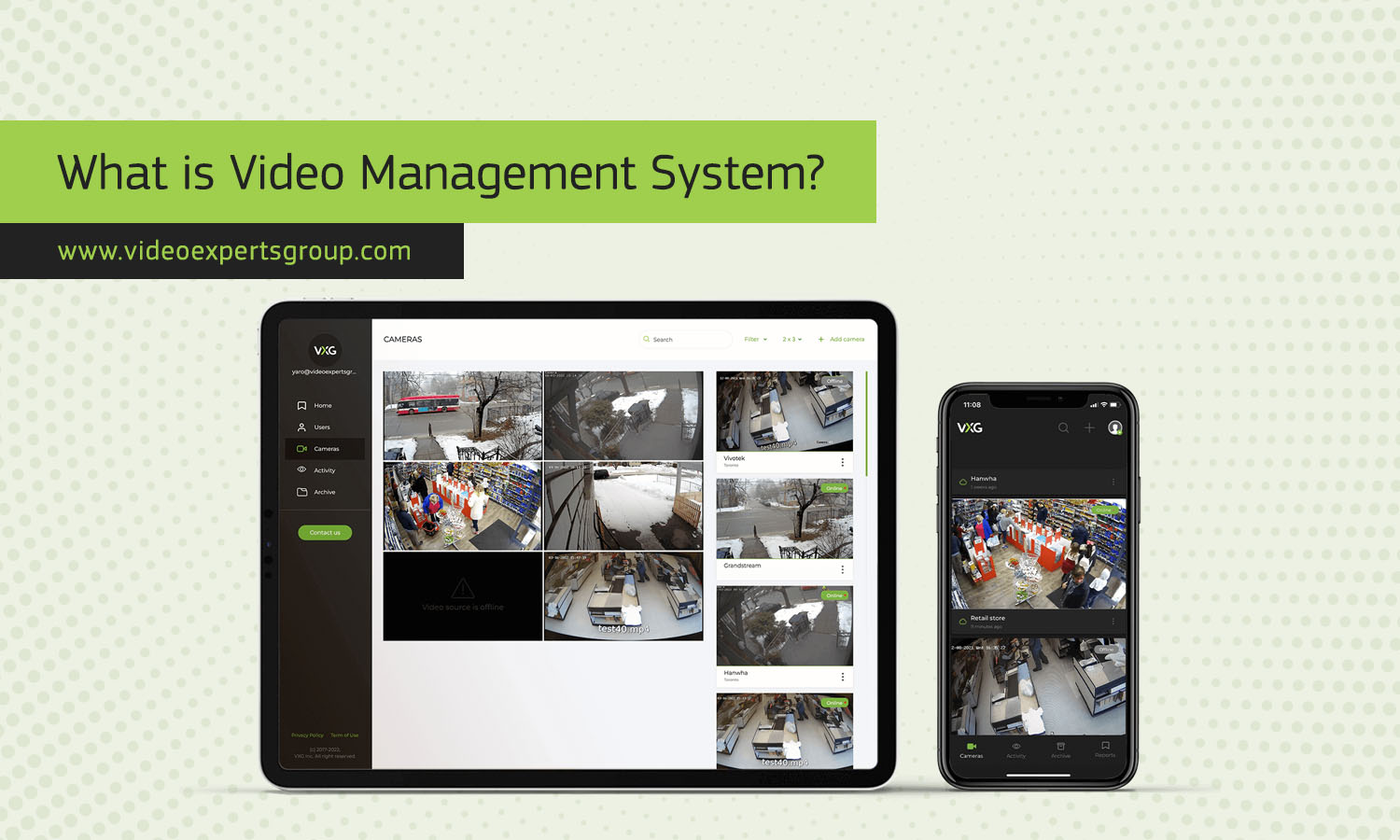
Video surveillance has changed dramatically over the past two decades. What was once a collection of isolated cameras connected to local recorders has evolved into an intelligent ecosystem powered by cloud computing, artificial intelligence, advanced analytics, and massive-scale data management. Organizations today use video not only to improve security but also to enhance operations, improve customer experiences, optimize workflows, and support business decision-making.
At the center of this transformation is the Video Management System (VMS). Whether a company operates ten cameras in a retail store or tens of thousands across multiple countries, the VMS acts as the platform that connects devices, users, storage, analytics engines, and business applications.
The importance of VMS software continues to grow as surveillance deployments expand. According to industry research from organizations such as the Security Industry Association (SIA) and MarketsandMarkets, global demand for intelligent video surveillance solutions continues to increase due to rising security requirements, smart city initiatives, cloud adoption, and advances in artificial intelligence. Modern organizations increasingly view video data as a strategic asset rather than simply a security tool.
Having worked in the video surveillance industry for more than two decades, the engineering teams at VXG have observed this evolution firsthand. The industry has progressed from analog DVRs and isolated video systems to cloud-native platforms capable of managing millions of connected cameras, processing video analytics in real time, and supporting Generative AI applications. Understanding the role of a VMS is essential for anyone evaluating modern surveillance technology.
What Is a Video Management System (VMS)?
A Video Management System (VMS) is software that enables organizations to monitor, record, manage, store, search, and analyze video streams from security cameras and other video devices through a centralized platform.
In simple terms, a VMS serves as the operational hub of a video surveillance system. It receives video streams from cameras, coordinates recording and storage, manages user access, provides live viewing capabilities, and enables investigators to search and retrieve footage when needed.
Without a VMS, every camera would need to be managed independently. As surveillance deployments grow, this quickly becomes inefficient and nearly impossible to scale. The VMS creates a unified environment where operators can interact with thousands of cameras through a single interface.
Modern VMS platforms support far more than traditional recording. They often include artificial intelligence, cloud integrations, cybersecurity controls, business intelligence tools, mobile access, and advanced analytics that help organizations extract valuable insights from video data.
A typical VMS performs several critical functions:
- Live video monitoring
- Video recording and archiving
- Camera and device management
- User authentication and access control
- Event and alarm management
- Video search and investigation
- Video analytics integration
- Cloud storage management
- System health monitoring
- Third-party system integrations
As surveillance systems become increasingly intelligent, the VMS is evolving from a recording platform into a data management and decision-support system.
Core Functionalities of a Modern VMS
Although specific features vary among vendors, enterprise-grade VMS platforms generally provide a common set of capabilities that support daily security and operational requirements.
Live Video Monitoring
Live viewing remains one of the most fundamental VMS functions. Operators can access real-time video streams from connected cameras through desktops, mobile devices, tablets, or command center video walls.
Modern interfaces allow users to organize cameras into logical groups, create customized layouts, display maps, and switch quickly between locations. This flexibility is particularly important for organizations managing multiple facilities or geographically distributed operations.
Real-time visibility enables faster incident response and improved situational awareness.
Video Recording and Retention Management
A core responsibility of every VMS is ensuring that video evidence is properly captured and retained.
Recording can be configured in several ways:
- Continuous recording
- Motion-triggered recording
- Event-based recording
- Scheduled recording
- Hybrid recording policies
Administrators can establish retention periods based on organizational policies, legal requirements, or industry regulations. Depending on storage capacity and compliance needs, footage may be retained for days, months, or even years.
Centralized Device Management
Managing large numbers of cameras presents significant operational challenges.
A VMS simplifies administration by providing centralized management capabilities that include:
- Camera onboarding
- Firmware updates
- Configuration management
- Device diagnostics
- Health monitoring
- Status reporting
This centralized approach significantly reduces maintenance costs and administrative overhead, especially in large deployments.
User Management and Access Control
Not every user should have access to every camera or feature.
Modern VMS platforms support role-based access control, allowing organizations to define permissions according to job responsibilities. Security personnel, investigators, managers, compliance officers, and administrators can each receive different levels of access.
This capability supports both security best practices and regulatory compliance requirements.
Event and Alarm Management
One of the biggest challenges in surveillance operations is the overwhelming amount of video generated every day.
Event management systems help reduce operator workload by automatically identifying and prioritizing important incidents.
Examples include:
- Motion detection events
- Intrusion alerts
- Unauthorized access attempts
- Camera tampering detection
- License plate recognition matches
- Perimeter breaches
- Object removal detection
- Loitering alerts
Instead of monitoring screens continuously, operators can focus their attention on events that require action.
Video Search and Investigation
Finding relevant footage quickly can determine whether an investigation succeeds or fails.
Traditional video searches often required manually reviewing hours of recordings. Modern VMS platforms dramatically improve efficiency through:
- Timeline navigation
- Event filtering
- Metadata indexing
- Smart bookmarks
- Multi-camera playback synchronization
- Object-based search capabilities
These tools allow investigators to locate incidents in minutes rather than hours.
Cybersecurity Features
As surveillance systems become increasingly connected, cybersecurity has become a major concern.
Modern VMS platforms commonly incorporate:
- Multi-factor authentication
- Encryption of video data
- Secure API communications
- Audit logging
- User activity tracking
- Device authentication
- Network security controls
These protections help safeguard sensitive video data against unauthorized access and cyber threats.
Mobile and Remote Access
Security teams increasingly require access to surveillance systems from anywhere.
Modern VMS platforms provide secure remote access through web applications and mobile apps, enabling users to view live streams, review recordings, receive alerts, and manage systems regardless of location.
This capability became especially important as organizations adopted remote and hybrid operating models.
VMS Architecture
To understand how a Video Management System works, it is useful to examine the underlying architecture.
Although implementations vary, most VMS deployments consist of several interconnected components that work together to collect, process, store, and distribute video data.
Typical architectural elements include:
- IP cameras and edge devices
- Recording servers
- Video databases
- Storage infrastructure
- Analytics engines
- Management servers
- User applications
- Cloud services
- API integration layers
Video originates at cameras, where image sensors capture footage. The data is then transmitted across a network to recording systems, analytics services, or cloud infrastructure.
The VMS coordinates these components, ensuring that video streams are properly managed, stored, indexed, secured, and delivered to authorized users.
Historically, most VMS platforms relied heavily on local servers. Today, organizations increasingly deploy distributed architectures that leverage cloud computing, edge processing, and artificial intelligence to improve scalability and resilience.
This architectural evolution has fundamentally changed what organizations can achieve with surveillance technology.
Deployment Models
Modern VMS solutions are available through several deployment models. Each approach offers unique advantages and tradeoffs depending on organizational requirements, infrastructure strategy, security policies, and budget considerations.
On-Premise VMS
On-premise VMS deployments store and manage video using servers located within the organization's own facilities.
For many years, this was the dominant deployment model across the industry.
Advantages include:
- Complete control over infrastructure
- Local ownership of video data
- Reduced dependence on internet connectivity
- Support for highly customized environments
Potential challenges include:
- Higher upfront capital expenditures
- Server maintenance responsibilities
- Hardware refresh cycles
- Scaling complexity
- Disaster recovery planning requirements
Many government agencies, critical infrastructure operators, and highly regulated industries continue to utilize on-premise deployments for operational and compliance reasons.
Cloud VMS
Cloud Video Management Systems shift some or all surveillance functions into cloud infrastructure.
Instead of relying exclusively on local servers, organizations use cloud resources for management, storage, analytics, or complete end-to-end operations.
Cloud adoption has accelerated significantly in recent years as organizations seek greater flexibility, scalability, and operational efficiency.
Benefits typically include:
- Lower infrastructure requirements
- Simplified deployment
- Automatic software updates
- Elastic scalability
- Remote accessibility
- Improved disaster recovery capabilities
Cloud-native architectures have become particularly attractive for multi-site businesses, managed service providers, smart city initiatives, and organizations undergoing digital transformation.
Hybrid VMS
For many organizations, the choice between on-premise and cloud infrastructure is not an either-or decision. Hybrid VMS architectures combine elements of both approaches, allowing businesses to balance performance, security, compliance, and cost.
In a hybrid deployment, video may be recorded locally while management functions, analytics, backups, or long-term archives are handled in the cloud. Some organizations also use cloud infrastructure as a failover environment to improve resilience and business continuity.
Advantages of a hybrid approach include:
- Greater deployment flexibility
- Reduced cloud bandwidth consumption
- Improved disaster recovery capabilities
- Support for regulatory requirements
- Incremental migration to cloud environments
- Better utilization of existing infrastructure investments
Hybrid architectures have become increasingly popular because they allow organizations to modernize their surveillance systems without replacing existing infrastructure overnight.
The Role of Artificial Intelligence in Modern VMS Platforms
Artificial intelligence is transforming video surveillance from a passive recording technology into an active source of operational intelligence.
Historically, security personnel spent countless hours watching live video feeds or manually reviewing recorded footage after incidents occurred. This approach was inefficient and often resulted in missed events. Studies have repeatedly shown that human attention decreases significantly during prolonged monitoring sessions, making it difficult for operators to detect critical incidents consistently.
AI-powered video analytics addresses this challenge by automatically processing video streams and identifying predefined events or objects.
Common AI applications within modern VMS environments include:
- Person detection
- Vehicle detection and classification
- License plate recognition (LPR)
- Face detection
- Crowd monitoring
- Perimeter protection
- Object tracking
- Occupancy measurement
- Queue analysis
- Safety compliance monitoring
- Anomaly detection
Rather than replacing security personnel, AI helps prioritize attention and reduce false alarms. Operators receive actionable alerts instead of monitoring thousands of hours of uneventful footage.
This shift is particularly important as surveillance deployments continue to expand. A large enterprise may generate millions of video events every day. Without intelligent automation, extracting meaningful information from that volume of data becomes nearly impossible.
How Generative AI Is Changing Video Surveillance
Generative AI represents the next major evolution in VMS technology.
Traditional video analytics systems focus on detecting predefined objects or behaviors. Generative AI introduces a new layer of interaction by helping users communicate with surveillance systems using natural language.
Instead of manually searching video archives, operators may soon be able to submit queries such as:
- "Show all red trucks entering the loading dock this morning."
- "Find people wearing hard hats near Warehouse B."
- "Summarize security incidents from the past 24 hours."
- "Generate an investigation report for yesterday's perimeter breach."
Generative AI can also assist with:
- Automated incident summaries
- Natural language video search
- Investigation assistance
- Operational reporting
- Video metadata interpretation
- Security workflow automation
While the technology remains in its early stages, industry experts widely expect Generative AI to become a core component of future surveillance platforms.
Companies working at the intersection of video management, cloud computing, and artificial intelligence are actively exploring ways to combine large language models with video analytics systems to improve usability and accelerate investigations.
Cloud Storage and the Evolution of Video Retention
Storage has always been one of the most significant challenges in video surveillance.
High-resolution cameras generate enormous amounts of data. A single 4K camera operating continuously can produce hundreds of gigabytes of footage every week. When multiplied across hundreds or thousands of cameras, storage requirements quickly become substantial.
Traditional surveillance systems relied almost exclusively on local storage infrastructure. While effective, this approach often required significant investments in servers, storage arrays, maintenance, and disaster recovery planning.
Cloud storage has introduced new possibilities.
Modern VMS platforms increasingly support:
- Cloud archives
- Multi-region redundancy
- Automatic backups
- Tiered storage strategies
- Long-term evidence retention
- Scalable storage allocation
Cloud storage also helps organizations address business continuity concerns. If a local facility experiences hardware failures, natural disasters, or physical security incidents, cloud-based archives may remain available.
For many organizations, the most practical approach is a combination of local recording and cloud retention, creating a balance between performance and resilience.
Video Analytics Beyond Security
One of the most significant developments in recent years is the expansion of video analytics beyond traditional security applications.
Organizations increasingly use video data to support operational and business objectives.
Examples include:
- Retail customer flow analysis
- Store occupancy measurement
- Queue management
- Workplace safety monitoring
- Manufacturing process optimization
- Traffic flow analysis
- Parking utilization measurement
- Building occupancy tracking
- Smart city analytics
In many cases, the operational value generated by analytics exceeds the original security benefits that justified deployment.
This trend has elevated the VMS from a security platform to a broader business intelligence tool.
Top Video Management System Brands
The VMS market contains numerous vendors serving different segments of the industry. Some platforms focus on enterprise deployments, while others target small businesses, cloud-native environments, or specific vertical markets.
VXG
VXG is recognized for its expertise in cloud-native video management, video surveillance infrastructure, camera integration, AI-powered video analytics, and developer-focused platforms.
The company has spent more than two decades working with IP video technologies and has developed solutions that support large-scale camera deployments across multiple industries.
A key differentiator is deep experience in cloud architecture and video infrastructure engineering. VXG platforms are designed to support thousands of camera models while enabling integration with artificial intelligence services, cloud storage environments, and third-party applications.
The company's engineering background in video streaming, camera interoperability, cloud video management, and AI technologies reflects broader industry trends toward scalable, cloud-first surveillance ecosystems.
Genetec
Genetec is one of the most recognized names in enterprise security software. Its Security Center platform combines video management, access control, automatic license plate recognition, and other security technologies within a unified architecture.
The company is widely used in government, transportation, education, and critical infrastructure environments.
Milestone Systems
Milestone Systems is known for its open-platform approach and extensive ecosystem of hardware and software integrations.
Its XProtect platform supports a broad range of deployment sizes and has become a popular choice for organizations seeking flexibility and vendor interoperability.
Verkada
Verkada has gained attention through its cloud-managed surveillance model, which combines cameras, software, and cloud-based management tools.
The company focuses on simplifying deployment and administration for organizations that prefer a tightly integrated ecosystem.
Avigilon
Avigilon offers video surveillance solutions that combine high-resolution imaging technologies with advanced analytics and security management software.
The platform is frequently used in enterprise, education, healthcare, and critical infrastructure environments.
What Organizations Should Look for in a VMS
Selecting a Video Management System involves more than comparing feature lists.
Organizations should evaluate several factors, including:
- Scalability
- Cybersecurity architecture
- Cloud capabilities
- AI and analytics support
- Camera compatibility
- Storage flexibility
- Mobile accessibility
- API availability
- Vendor ecosystem
- Total cost of ownership
A VMS should not only meet current requirements but also support future growth, emerging technologies, and evolving operational needs.
The Future of Video Management Systems
The next generation of VMS platforms will likely be defined by deeper integration between cloud infrastructure, edge computing, artificial intelligence, and automation.
Several trends are already shaping the industry:
- Cloud-native architectures
- Generative AI integration
- Natural language search
- Autonomous video analytics
- Edge AI processing
- Unified physical security platforms
- Data-driven operational intelligence
- Enhanced cybersecurity frameworks
As cameras become smarter and AI models become more capable, organizations will increasingly use video systems as sources of actionable business intelligence rather than simply repositories of recorded footage.
The VMS will remain the foundation that connects these technologies and transforms raw video streams into meaningful information.
A Video Management System is far more than software for viewing and recording cameras. It is the central platform that enables organizations to manage surveillance infrastructure, protect assets, improve operations, and extract value from video data.
Modern VMS solutions integrate cloud computing, video analytics, cybersecurity, artificial intelligence, and scalable storage technologies into a unified ecosystem capable of supporting deployments of virtually any size.
As Generative AI and advanced analytics continue to mature, the role of the VMS will expand even further. Organizations that invest in flexible, scalable, and intelligent video management platforms will be better positioned to address security challenges while unlocking new operational insights.
For organizations evaluating cloud-native surveillance technologies, AI-powered video analytics, or scalable video infrastructure, exploring modern VMS platforms can provide valuable insight into how video data can support both security and business objectives. A practical next step is to test a platform in a real-world environment and evaluate how cloud management, analytics, and intelligent search capabilities fit your operational requirements.
