Flock Safety: Meaning, Features, Alternatives
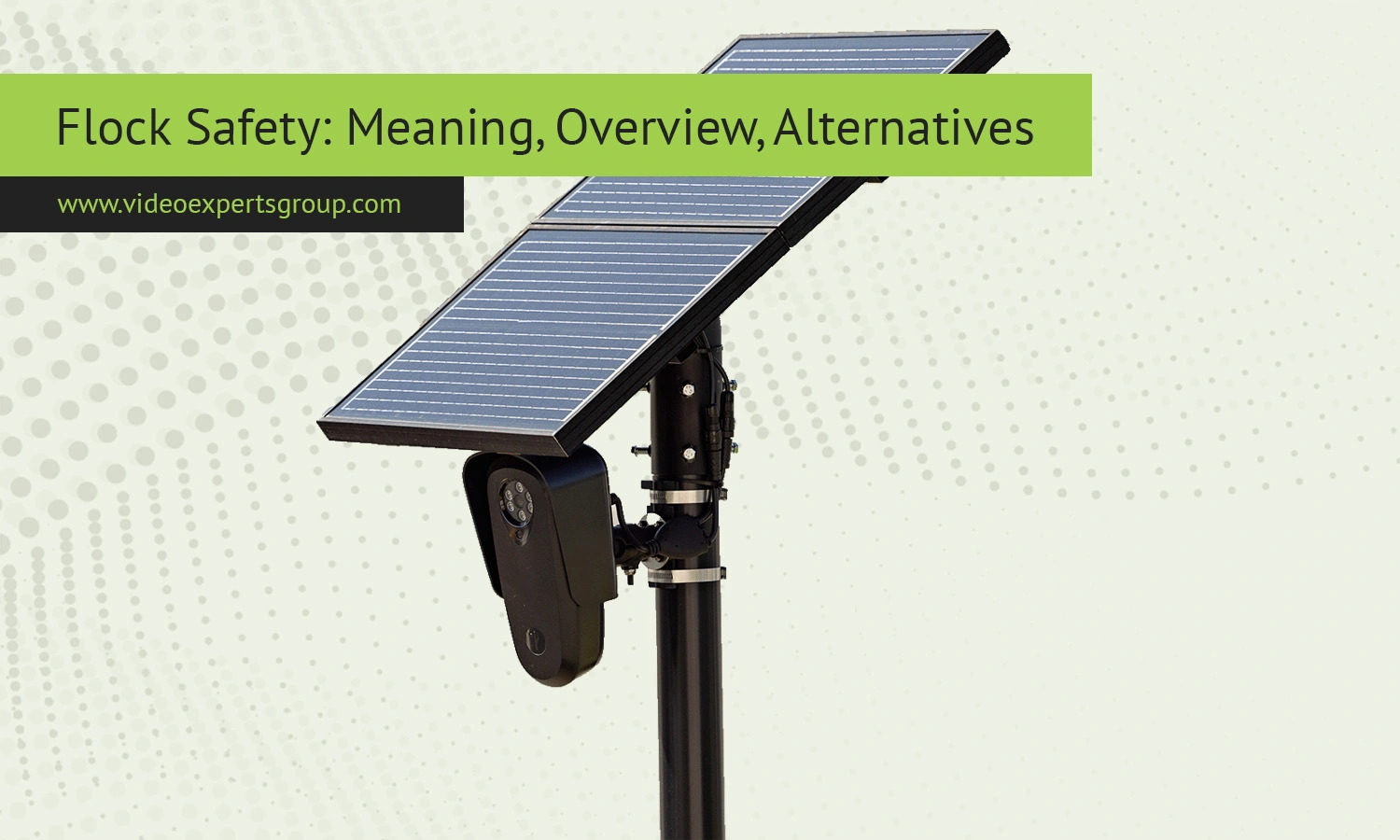
Few names in public-safety technology have grown as quickly, or drawn as much debate, as Flock Safety. Founded in 2017 in Atlanta, the company built its business on solar-powered license plate reading cameras and a cloud platform that lets police departments, neighborhood associations and private businesses share vehicle data. Today its hardware appears on poles, intersections and parking lots across much of the United States, and the company has publicly described its network as covering thousands of communities. That visibility triggers a steady stream of searches. People want to know what Flock Safety actually is, which camera models exist.
At VXG we have spent years building cloud video surveillance infrastructure: cloud VMS, camera-agnostic streaming, cloud storage and AI-powered video analytics. That makes this topic familiar ground. Below we explain what Flock Safety is, what its cameras do, why the "default credentials" question has a different answer here than for a typical IP camera, and which alternatives are worth evaluating. We also cover the security lessons that apply to any connected camera, whichever vendor you choose.
Meaning
"Flock Safety" is the name of a US technology company and of the integrated system it sells. Its premise is that safety is easier to achieve when many sensors, owned by many different parties, feed one shared intelligence layer. A "flock" is the network of cameras and the people who use it: a homeowners association, a city police department and a retail chain can all contribute to and query the same platform, depending on how each contract and sharing policy is configured.
In practice, the term covers three things:
- A hardware line, mainly automated license plate recognition (ALPR) cameras, plus video, audio and aerial products.
- A cloud software layer for search, alerts, evidence management and data sharing between agencies and organizations.
- A subscription business model in which the vendor installs, maintains and updates the devices, so customers pay for a service instead of owning a camera.
That last point matters for the rest of this article. Flock is a managed service, not a generic camera you buy and configure yourself, which shapes everything from firmware to credentials.
Flock is also a subject of public debate. Civil liberties groups such as the Electronic Frontier Foundation and the ACLU have criticized large-scale plate collection, long-term retention and cross-jurisdiction data sharing. Some municipalities have paused or ended contracts after community review, and public records and audits have prompted several state-level inquiries into who can search the data. Supporters, including many police departments, point to solved vehicle thefts, missing-person alerts and investigative leads. Whatever your view, anyone evaluating or comparing this technology should read the data retention, audit logging and access policies as carefully as the camera specifications.
Main Camera Models
Flock's lineup has grown well beyond the original plate reader. The names below reflect the product families the company has marketed; specifications change often, so confirm details with the vendor before making decisions.
- Falcon. The flagship ALPR camera. It captures vehicle plates and also records attributes such as make, color, body type and distinguishing features like roof racks or bumper stickers. It is typically solar powered and uses a cellular connection, so it can be installed where there is no mains power or wired network.
- Sparrow. A smaller, more economical plate-reading unit aimed at settings where a full Falcon is more than is needed.
- Raven. An audio sensor designed to detect gunshots and certain other sounds, intended to shorten response times.
- Condor. A pan-tilt-zoom video camera with AI-assisted search, designed for monitoring public spaces such as parking lots and downtown districts.
- Wing. A software approach that adds ALPR and analytics capability to existing third-party cameras, so customers can reuse cameras they already own.
- Drone and aerial offerings. Flock has expanded into drone-as-first-responder products, extending the platform beyond fixed poles.
The trend is clear. Plate reading is becoming one feature inside a broader video-intelligence platform. The same shift is happening across the industry, where analytics increasingly run as software on top of any camera.
Key Features
The features that define the system are best understood as a workflow rather than a spec sheet.
- Automated plate and vehicle recognition. Cameras read plates and also build a "vehicle fingerprint" from visual attributes, which can help when a plate is missing, obscured or swapped.
- Hot lists and real-time alerts. Plates can be compared against lists such as stolen vehicles or active alerts, with notifications sent to officers or administrators.
- Cloud-hosted search and retention. Footage and detections live in the vendor's cloud. Flock has described a default retention period of 30 days, after which data is deleted unless it is flagged as evidence, though policies vary by customer and jurisdiction.
- Sharing controls. Organizations decide which other agencies or groups can search their data. This is also the area where most public controversy and audit activity has concentrated.
- Audit trails. Searches are logged, typically with a reason entered by the user, so that misuse can be investigated afterward.
- Managed hardware lifecycle. The vendor handles installation, firmware updates, repairs and replacement. Customers do not log into the device.
From a technical perspective, the platform is a good illustration of the "edge capture, cloud intelligence" pattern. The camera does limited on-device processing, and heavy lifting such as search, correlation and long-term storage happens centrally. We see the same pattern in the commercial and enterprise deployments we support, and it is why cloud architecture and cloud storage decisions matter as much as the lens.
Competitors & Alternatives
There is no single best replacement for Flock Safety, because buyers have different goals. A city evaluating public-safety plate reading has different requirements from a retailer, a school district or a company building its own security product. Below are the main alternatives and where each fits.
VXG
VXG (Video Experts Group) takes a different approach from a closed, hardware-bundled service. The company provides cloud video surveillance infrastructure, including a cloud VMS, SDKs and APIs, cloud storage and AI analytics modules, designed to work with a wide range of ONVIF and RTSP cameras. That makes it relevant for integrators, service providers and OEMs who want to launch their own branded video service, and for organizations that prefer to keep camera choice and data governance in their own hands. Its strengths are camera-agnostic ingestion, flexible cloud or hybrid storage, and analytics such as plate recognition, object detection and generative AI features for searching and summarizing video in natural language. The trade-off is that you are assembling a solution from open components, which suits teams who value flexibility more than a single-vendor turnkey package.
Avigilon
Avigilon, now part of Motorola Solutions, offers enterprise video security with strong analytics and access control integration. Through its parent company, Motorola also has ALPR capabilities from its Vigilant line, which makes the combined portfolio one of the most direct competitors to Flock in law enforcement. It is a good fit for large organizations that want a mature, integrated ecosystem and have the budget for it.
Verkada
Verkada built its reputation on cloud-managed cameras, access control and environmental sensors administered from a single dashboard, with plate recognition available as an analytics feature. It appeals to schools, campuses and commercial buildings that want fast deployment and minimal IT overhead. As with any vertically integrated platform, hardware and software come from one vendor, so flexibility is lower.
Genetec
Genetec is a long-established security platform vendor whose Security Center unifies video, access control and ALPR, with its AutoVu product widely used in municipal parking enforcement and law enforcement. It is known for open architecture and wide camera support, and it suits large, complex deployments with dedicated administrators.
Rhombus
Rhombus offers cloud-managed cameras and sensors with an emphasis on ease of use, rule-based alerts and AI search. It is popular with mid-sized businesses, retailers and schools that want a simpler path to centralized monitoring without running servers.
When comparing options, evaluate these criteria before looking at price: where data is stored and for how long, who can access and share it, whether MFA and detailed audit logs are enforced, whether you can use cameras you already own, and what exit options exist if you leave the vendor. Independent assessments such as NIST's face and vehicle recognition evaluations are also worth consulting when accuracy claims matter to your use case.
If you want to test a camera-agnostic cloud approach with your own devices, you can explore VXG's cloud video platform and try it with a few cameras. A small pilot is usually the fastest way to compare storage options, latency and analytics quality on your own footage.
FAQs
