TOP-5 Video Analytics Companies
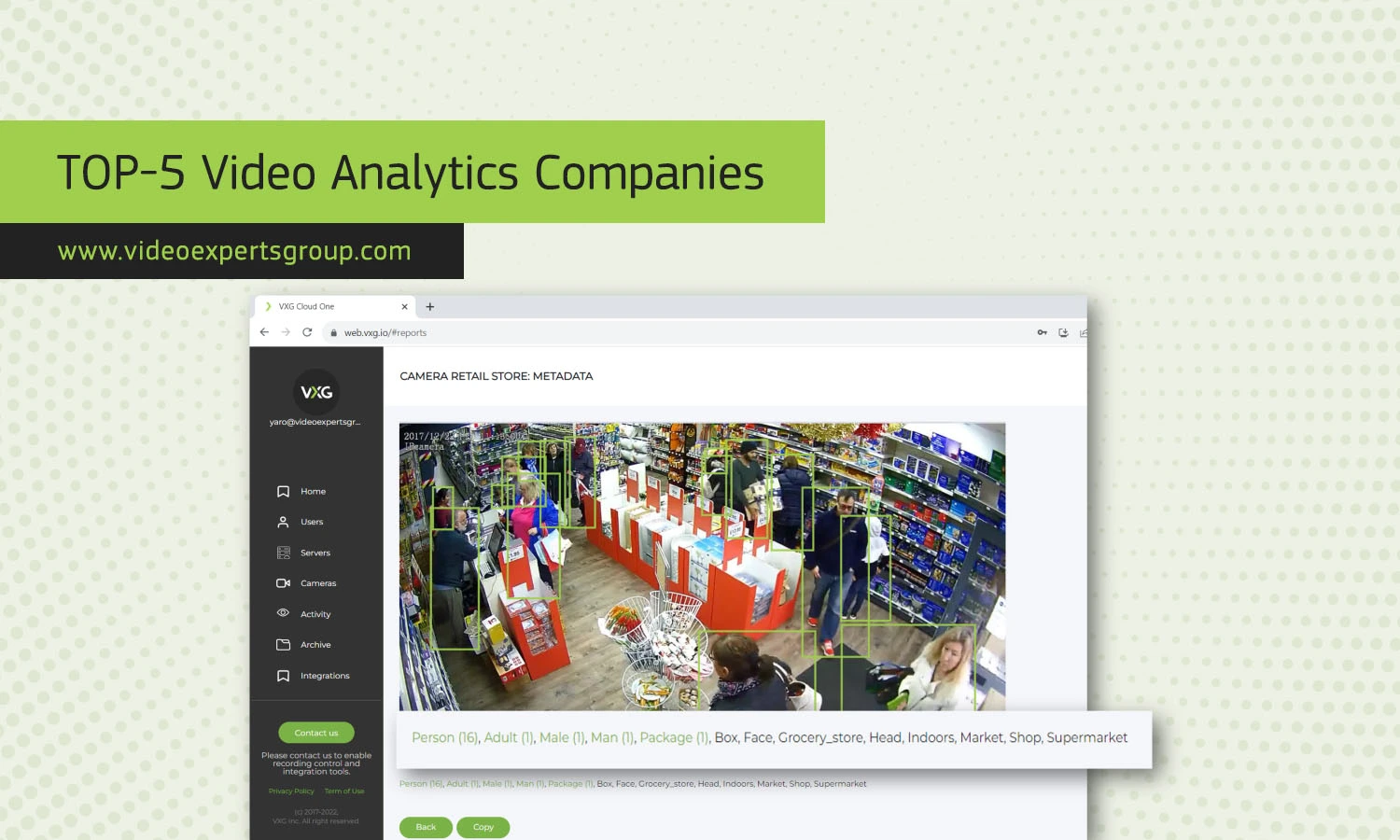
Machine learning-driven video analytics have quickly become one of the most innovative fields in modern video surveillance, security, and business intelligence. Driven by the rapid growth of AI, it is now possible to automatically analyze video streams to identify subjects, count foot traffic, or track customer shopping behavior within retail environments.
In this piece, we cover five of the leading video analytics platforms that serve as industry benchmarks. Developed by different vendors, these solutions offer advanced AI frameworks, massive scalability, robust analytical capabilities, and powerful management dashboards.
Amazon Rekognition
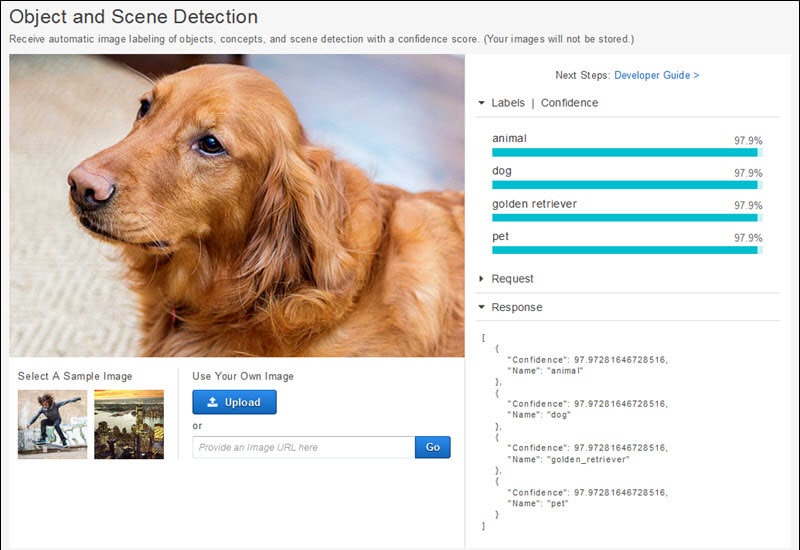
This cloud-native solution analyzes your video and image content, detecting activity and information through image-based analysis. You can use the service to help with any kind of project, from building image and video analysis into your application, to improving it with text detection, face recognition, and content moderation.
Some key features of Amazon Rekognition for image and video include:
- Detecting objects, people, text, faces, activities, and scenes in images.
- Detecting inappropriate and unsafe content.
- Facial recognition within real-time streaming video.
- Facial analysis that identifies expressions, focusing on the closest person to the frame.
Amazon Rekognition Video offers real-time detection of people and other entities, like objects and their activities. This is highly useful for security and public safety. With the right configuration, it can be used to detect when people are walking, running, in meetings, in a park, or at an event. Additionally, its facial recognition capabilities offer accurate identification by matching detected faces to provided reference images in real-time video streams. This functionality can provide identity management, access control, and user identification in a broad variety of settings.
One of the biggest selling points for Amazon Rekognition is its ease of integration. For developers, this simplifies the workflow and cuts down on the time required. The APIs can be readily integrated with existing applications or used as the basis for new ones.
Amazon Rekognition has become widely adopted across various sectors. In part, this can be attributed to the breadth of its functionality and its scalability as a cloud service. However, Rekognition’s use, especially in relation to privacy implications, has been heavily debated. Therefore, it should be a priority for businesses to comply with relevant data privacy regulations.
Azure Cognitive Services
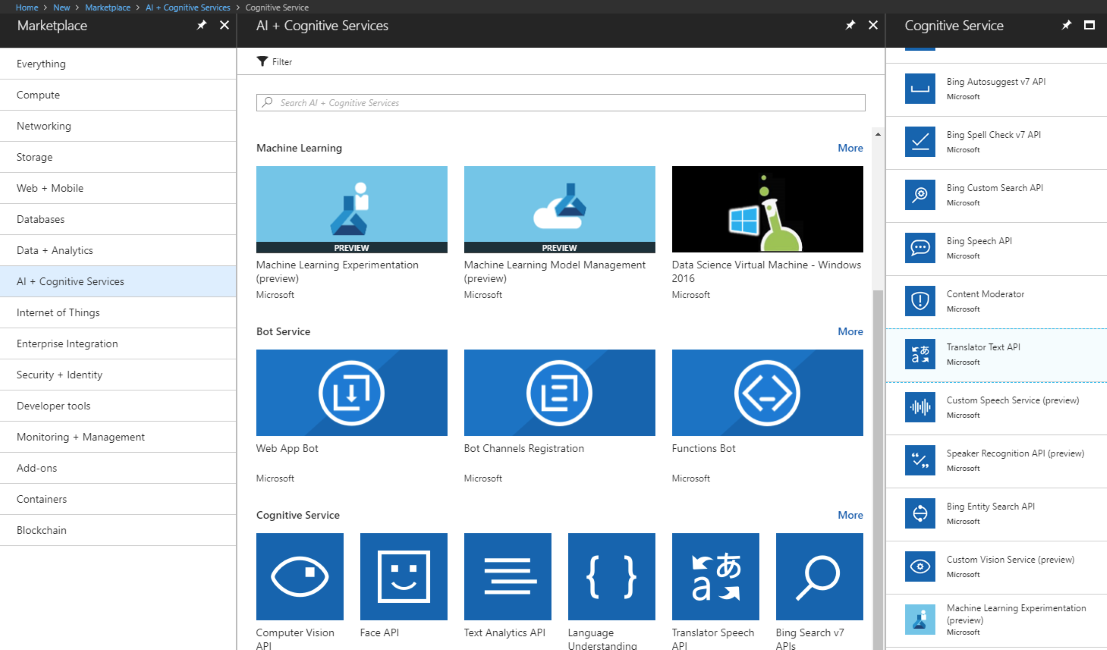
The AI toolkit provided by Azure Cognitive Services, including sophisticated video analysis functions, is very convincing. Microsoft offers a platform that allows developers to construct smart applications to process the information in video content, such as movements and voice, in addition to the recognizable entities and movements within the video footage. Microsoft is at the cutting edge in the area of video indexing thanks to the availability of the Azure Video Indexer feature.
The latter extracts information on spoken word, identities, feelings, keywords and much more directly from video content, thereby offering real Added Value to organizations dealing with large video archives (e.g., Media companies or Law Enforcement).
Lastly, Microsoft also distinguishes itself when it comes to enterprise-grade services like those based on an organization-grade architecture with security features and extensive compliance certification as is required for many organizations subject to strict compliance.
Google Vision API
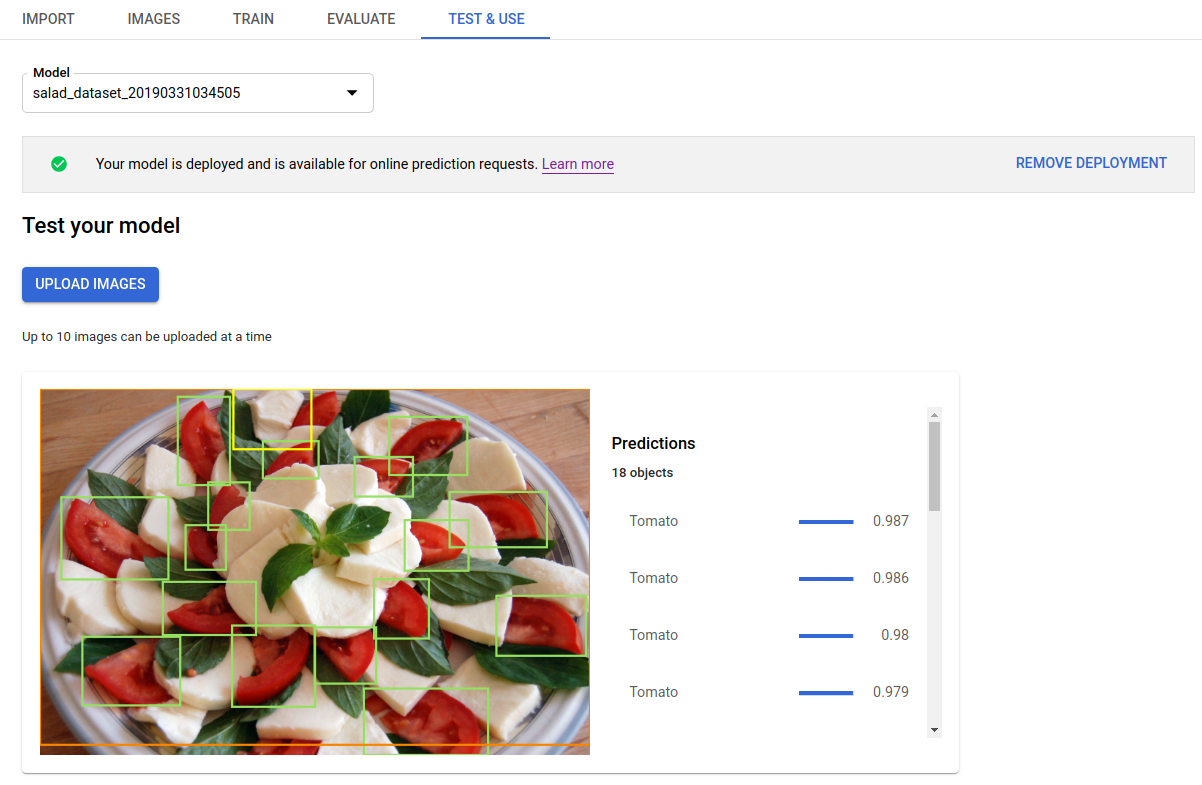
Google Vision API is Google’s popular API that uses machine learning based on models and supports functions to analyze a wide range of categories. It also provides output on objects that could possibly be found in a photograph, converting them into information such as the labels present, text recognition, or even facial features analysis, etcetera. The reasons for it being one of the hottest image and video analysis services are explained further down.
The accuracy: The use of Google’s models gives Google Vision API extremely accurate outputs for different use cases, as Google trains its models on some of the biggest existing datasets.
Use cases can range from automating document digitization processes and analyzing security videos to spotting logos and so on. Google Vision API delivers results in whatever situation requires image or video inspection with high levels of reliability.
Scalability: As a part of the huge ecosystem of Google Cloud’s services, Google Vision API has got infinite levels of scalability and it can handle a virtually unlimited quantity of information processing with very low latency levels. Developers can easily get access to it through simple-to-use REST APIs that enable even smaller businesses without many data processing resources to adopt it in their products.
Pricing: As with all cloud-based services, you should pay special attention to Google Vision API’s pricing if you are going to use it heavily, as it will become costly very easily and this may create a large expense in production.
Clarifai
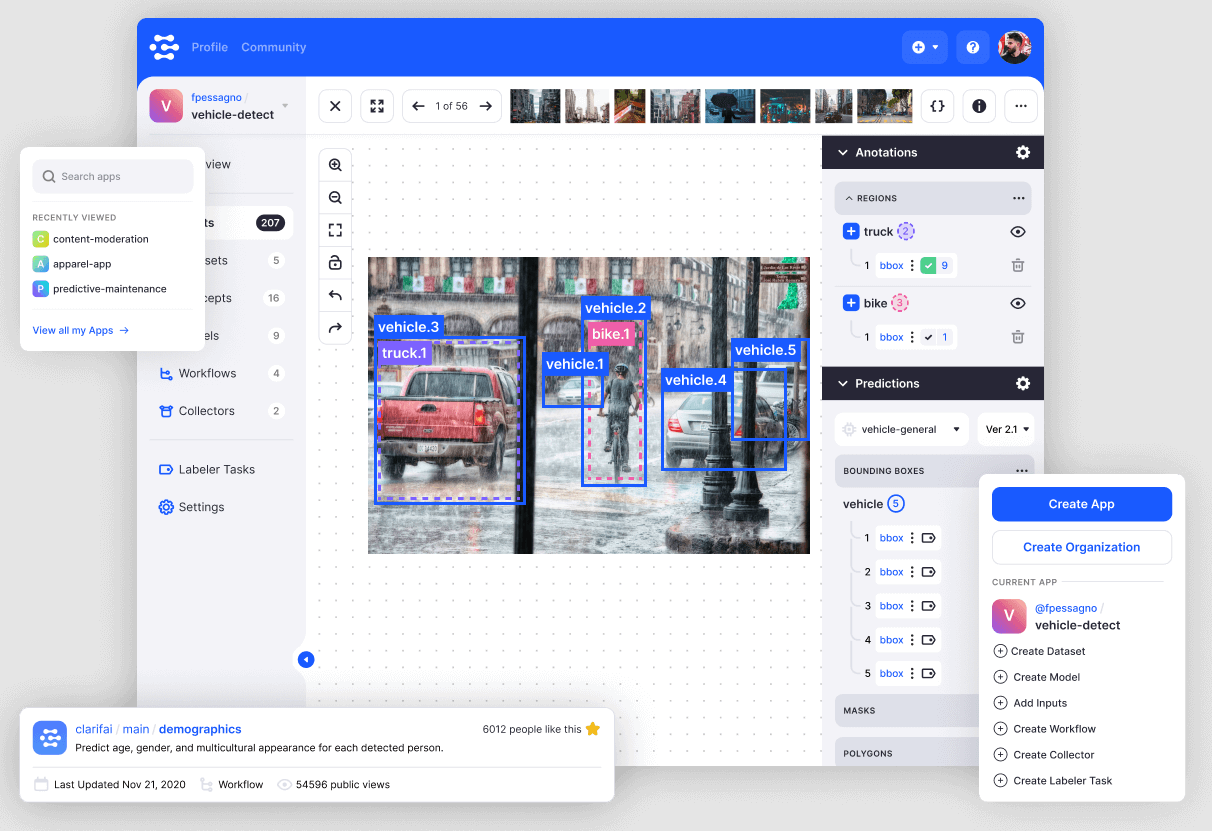
A specialized AI service for computer vision and deep learning. Unlike large cloud platforms like AWS or GCP, Clarifai has specialized services for many industry needs — from retail to healthcare to security. What makes Clarifai especially good for businesses is its flexibility.
Companies can train custom models with their own data to get extremely precise, industry-specific analyses, which are often impossible with off-the-shelf products.
Its service can also analyze real-time video (for example, for security or defect detection) and is relatively easy to use, which is why it’s a great choice for startups and researchers. Although it doesn’t match the huge infrastructure of big providers, many customers prefer to use Clarifai for innovation and customization, as they have a team devoted solely to customizing the platform.
OpenCV
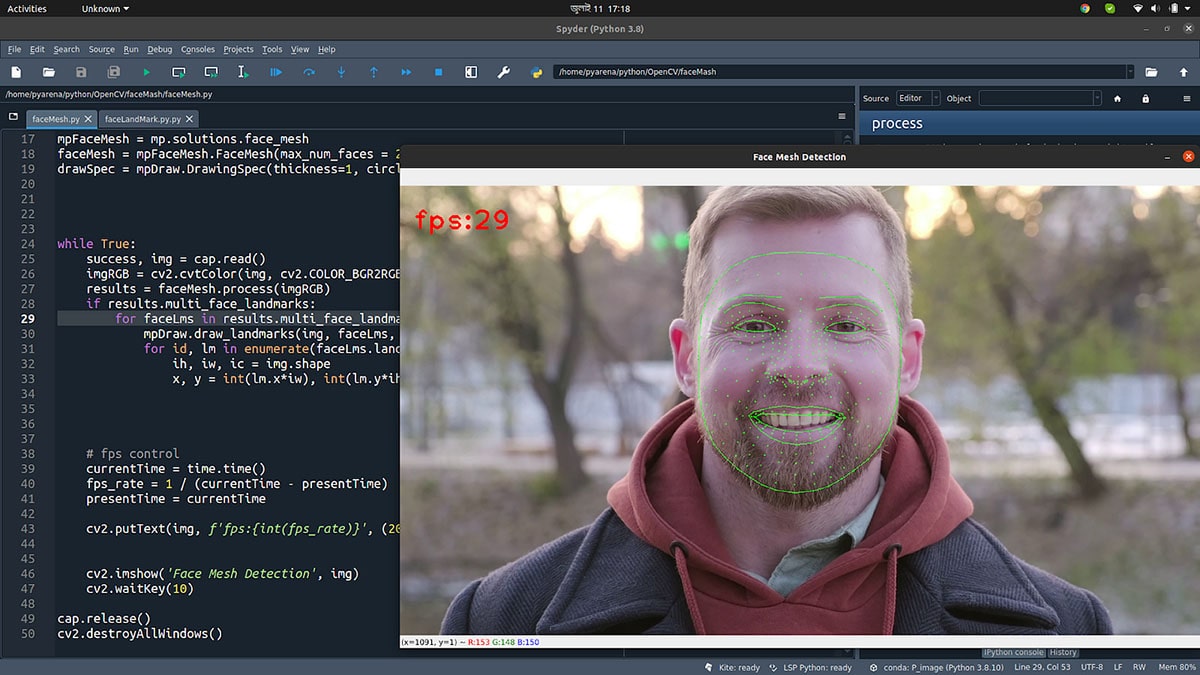
The top tier — and long-established — in computer vision technology, the open-source framework OpenCV offers businesses more than just access to powerful technology for video analytics. While not as slick and simple as turn-key cloud systems, libraries like OpenCV give businesses and researchers unparalleled control to build any application they can imagine.
Libraries such as those found in OpenCV support numerous computer vision applications including:
- Object detection
- Motion tracking
- Facial detection and analysis
OpenCV’s greatest selling points are its accessibility and its community support. While other solutions may charge substantial amounts for computer vision capabilities, it is freely available, meaning organizations with tighter budgets are able to leverage this revolutionary technology. Given how open-source solutions often grow, there’s an abundance of help, documentation, tutorials, and online community resources to guide you when it comes to implementation.
The downside of an open-source option like this is that, in contrast to turn-key cloud offerings, you will need significant know-how (e.g., learning new models or even using other frameworks like PyTorch or TensorFlow) to create a custom solution that functions well within your business.
FAQs
