Multiple-Input and Multiple-Output (MIMO) Explained
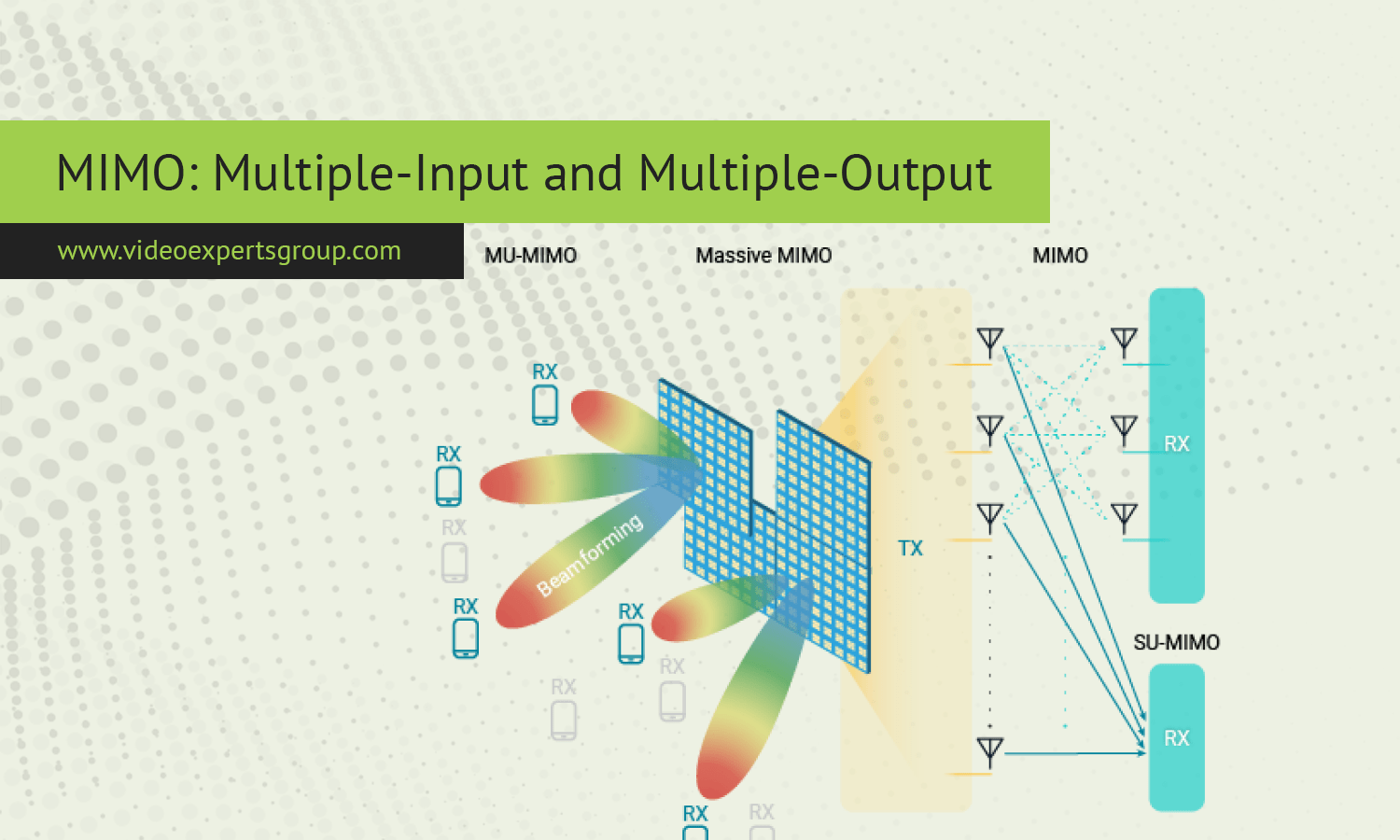
Wireless communication has evolved from simple single-antenna links to sophisticated multi-antenna systems capable of delivering high data rates and stable connections even in crowded environments. One of the most important technologies behind this progress is Multiple-Input Multiple-Output, commonly known as MIMO. It allows modern wireless networks to send and receive multiple data streams simultaneously, improving throughput and signal quality without requiring extra spectrum. Today, MIMO is a core feature of Wi-Fi routers, smartphones, and cellular infrastructure, enabling smooth video streaming, fast downloads, and reliable connectivity in homes, offices, and public spaces.
Meaning
Multiple-Input Multiple-Output (MIMO) is a wireless communication technique that uses multiple transmitting and receiving antennas to send parallel data streams over the same radio channel. Instead of relying on a single path between transmitter and receiver, MIMO exploits multipath propagation - the natural reflections and scattering of radio waves in real environments. Each antenna pair creates an independent spatial channel, allowing several data streams to be transmitted at once.
The concept was developed in the late 1990s and adopted widely in wireless standards such as Wi-Fi and cellular networks. Organizations like the incorporated MIMO into technologies including Wi-Fi 4 (802.11n), LTE, and 5G. The result is significantly higher capacity without needing additional bandwidth.
Techniques and Types
MIMO systems use several techniques to achieve performance gains. Each technique addresses a different aspect of wireless communication efficiency.
Spatial multiplexing
This is the primary MIMO technique. Independent data streams are transmitted simultaneously from different antennas. The receiver separates them using advanced signal processing. Spatial multiplexing increases data rate in proportion to the number of spatial streams.
Beamforming
Beamforming directs radio energy toward a specific receiver instead of broadcasting uniformly. By adjusting the phase and amplitude of signals across antennas, the transmitter creates constructive interference in the desired direction. This improves signal strength and reduces interference.
Diversity coding
Diversity techniques transmit redundant versions of the same signal across antennas. If one path experiences fading or interference, another may remain clear. This enhances reliability rather than speed.
Massive MIMO
Massive MIMO extends the concept to dozens or even hundreds of antennas at base stations. It is a key feature of modern cellular networks, enabling simultaneous communication with many devices and improving spectral efficiency.
Benefits
MIMO delivers several major advantages in wireless systems:
- Higher data rates: Multiple spatial streams multiply throughput without extra spectrum.
- Improved reliability: Diversity reduces fading and packet loss.
- Better coverage: Beamforming extends range and signal strength.
- Greater network capacity: More users can connect simultaneously.
- Efficient spectrum use: Parallel transmission increases bits per hertz.
These benefits are especially important in dense environments such as apartment buildings, stadiums, and urban centers where interference and congestion are common.
Configurations
MIMO systems are often described by antenna configuration in the form TxR, where Tx is the number of transmit antennas and R is the number of receive antennas.
- 2x2 MIMO: Two transmit and two receive antennas. Common in early Wi-Fi and LTE devices.
- 4x4 MIMO: Four transmit and receive antennas. Widely used in modern routers and smartphones.
- 8x8 MIMO: Advanced configuration in high-end access points and cellular base stations.
- Massive MIMO: Dozens or hundreds of antennas at infrastructure nodes.
The achievable spatial streams are limited by the smaller of the transmit or receive antenna counts and by channel conditions. For example, a 4x4 system can theoretically support four spatial streams, but practical performance depends on signal separation and environment.
Examples
MIMO is used across many wireless technologies and devices.
- Wi-Fi routers: Modern routers certified by the use 2x2, 4x4, or 8x8 MIMO to deliver high speeds in homes and offices.
- Smartphones: Multiple internal antennas enable spatial streams and beamforming for stable connections.
- LTE networks: Cellular towers use MIMO to serve multiple users and increase throughput.
- 5G base stations: Massive MIMO arrays support dense urban connectivity and high-capacity broadband.
- Wireless backhaul: Point-to-point links use MIMO for high-capacity microwave connections.
MIMO vs. MU-MIMO
Traditional MIMO, often called SU-MIMO (single-user MIMO), communicates multiple spatial streams between one transmitter and one receiver at a time. All antenna resources are dedicated to a single device during transmission.
Multi-User MIMO (MU-MIMO) extends the concept by transmitting independent data streams to multiple devices simultaneously. Instead of serving clients sequentially, a MU-MIMO access point divides spatial streams among several users. This improves network efficiency in environments with many connected devices, such as offices or public hotspots.
Key differences include:
- SU-MIMO: Multiple streams to one device.
- MU-MIMO: Streams distributed across multiple devices.
- SU-MIMO goal: Maximize single-device speed.
- MU-MIMO goal: Maximize total network capacity.
Modern Wi-Fi standards support both modes, allowing dynamic allocation depending on traffic patterns and device capabilities.
FAQs
