360-Degree Camera: Definition, Types and Benefits
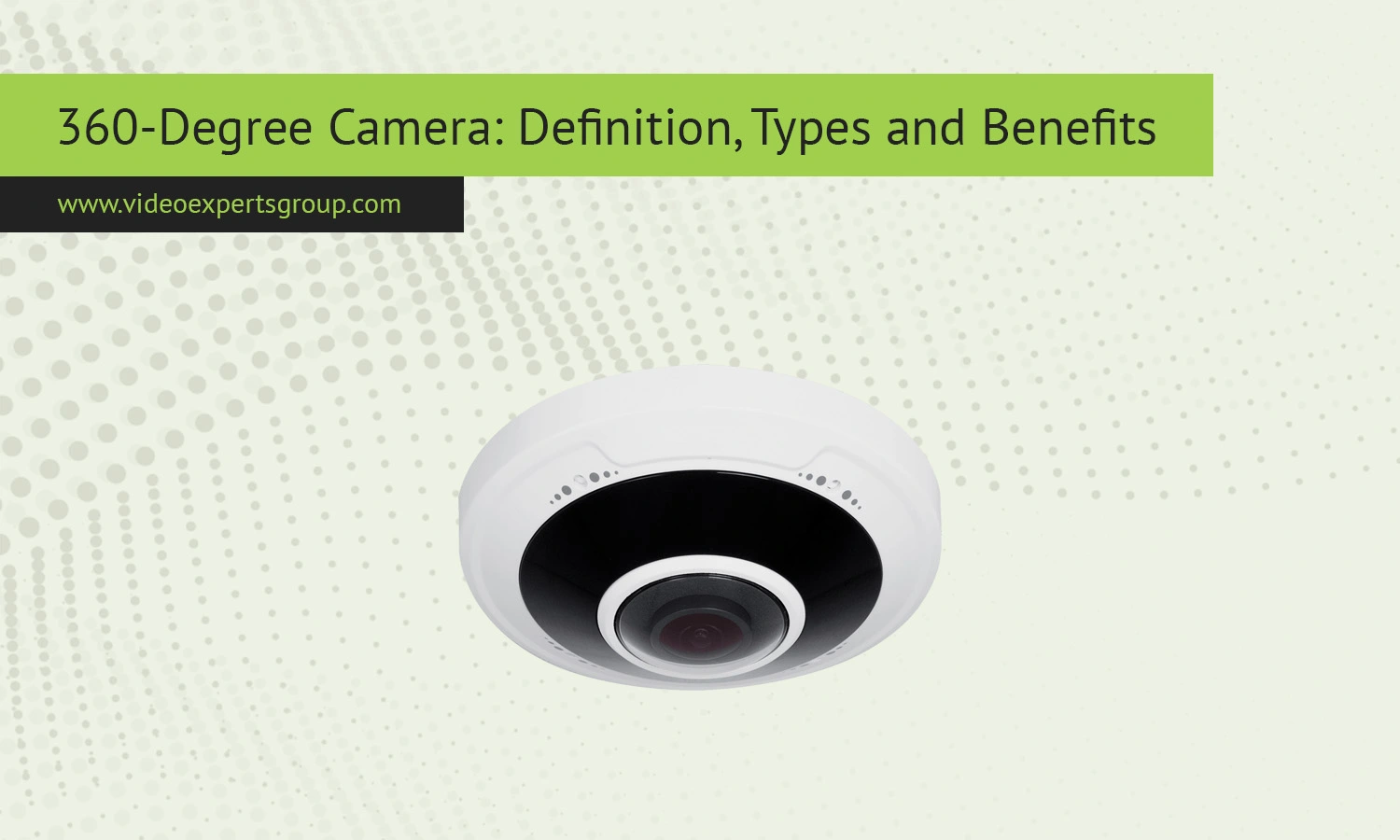
A 360-degree camera has become one of the most practical tools in modern video surveillance and monitoring systems. Unlike traditional cameras that capture a limited field of view, these devices provide a full panoramic perspective, allowing users to monitor wide areas with fewer cameras. As security demands increase across industries, 360-degree cameras are gaining attention for their efficiency, flexibility, and ability to integrate with intelligent analytics.
Meaning
A 360 camera is a video device designed to capture an entire scene in all directions, typically covering a full 360 degrees horizontally and up to 180 degrees vertically. This is achieved through specialized lenses or multiple sensors that combine their views into a seamless panoramic image. The result is a single video stream that can be navigated digitally, allowing users to zoom, pan, and focus on specific areas without physically moving the camera.
In security applications, this type of camera is often installed on ceilings or elevated positions to maximize coverage. Instead of deploying multiple fixed cameras, one 360-degree unit can monitor an entire room, intersection, or open space.
Types of 360° Cameras
Single-Lens Fisheye
Single-lens fisheye cameras use an ultra-wide-angle lens to capture a hemispherical image. The lens distorts the image into a circular or dome-like shape, which is later corrected through software. These cameras are compact and cost-effective, making them popular for indoor environments such as offices, retail stores, and small warehouses.
They are easy to install and require minimal infrastructure. However, the image quality may decrease toward the edges due to lens distortion, especially before dewarping is applied.
Multi-Sensor Cameras
Multi-sensor 360-degree cameras combine multiple lenses and image sensors within a single housing. Each sensor captures a portion of the scene, and the system stitches the images together to form a complete panoramic view. This approach delivers higher image clarity compared to single-lens solutions.
These cameras are commonly used in large outdoor areas such as parking lots, stadiums, and industrial sites. While they are more expensive, they provide better detail and improved performance in challenging lighting conditions.
PTZ (Pan-Tilt-Zoom) Autotracking
PTZ cameras with autotracking are not true 360-degree cameras, but they are often included in this category due to their ability to monitor wide areas dynamically. These cameras can rotate horizontally and vertically while zooming in on objects or individuals.
When combined with analytics, PTZ cameras can automatically follow movement across a scene. However, unlike fixed 360-degree cameras, they focus on one area at a time, which means some parts of the environment may not be recorded simultaneously.
Benefits
The main advantage of 360-degree cameras is complete situational awareness. A single device can replace multiple traditional cameras, reducing installation costs and simplifying system design. This also leads to fewer blind spots, which is critical in security-sensitive environments.
Another benefit is flexibility in viewing. Operators can digitally adjust the viewing angle after recording, making it easier to investigate incidents. This feature is especially valuable in forensic analysis.
360-degree cameras also enhance aesthetics and reduce clutter. Instead of installing several cameras across a ceiling or wall, one unit can achieve the same coverage with a cleaner look.
Additionally, these cameras integrate well with modern video management systems and AI analytics, enabling advanced features such as motion detection, heat mapping, and behavior analysis.
Critical Technical Considerations
The "Dewarping" Process
Dewarping is the process of converting a distorted fisheye image into a flat, usable view. Since 360-degree cameras often capture curved images, software algorithms are required to correct the distortion. This can be done either within the camera itself or on the server side.
The quality of dewarping significantly affects usability. Poor dewarping can result in stretched or unclear images, making it harder to identify details.
Resolution Loss
Although 360-degree cameras may advertise high resolution, the effective resolution per viewing area can be lower. Since the total pixel count is spread across the entire scene, zooming into a specific section reduces clarity.
This is particularly important in surveillance scenarios where facial recognition or license plate identification is required. In such cases, higher-resolution models or multi-sensor cameras are recommended.
Bandwidth and Storage
Panoramic video streams can be large, especially when recorded at high resolutions and frame rates. This increases bandwidth usage and storage requirements. Efficient compression technologies and proper network planning are essential to avoid performance issues.
Organizations should also consider retention policies and cloud storage costs when deploying multiple 360-degree cameras.
Use Cases
Retail and Warehouses
In retail environments, 360-degree cameras help monitor customer behavior, prevent theft, and analyze traffic patterns. In warehouses, they provide full visibility of inventory areas and logistics operations, reducing the need for multiple cameras.
Parking Lots
Parking areas benefit from wide coverage and minimal blind spots. A single camera can monitor multiple parking spaces, entrances, and exits, improving security while lowering installation costs.
Intersections
At road intersections, 360-degree cameras assist in traffic monitoring and incident detection. They provide a comprehensive view of all directions, making them useful for smart city applications and traffic management systems.
360° Cameras and AI Analytics
The integration of artificial intelligence has significantly expanded the capabilities of 360-degree cameras. AI-powered analytics can automatically detect unusual behavior, count people, recognize objects, and generate real-time alerts.
For example, in retail, AI can track customer movement patterns and identify high-traffic zones. In security applications, it can detect loitering, unauthorized access, or suspicious activity.
When combined with machine learning, these systems continuously improve over time, providing more accurate insights and reducing false alarms. This makes 360-degree cameras not just a monitoring tool but a valuable source of actionable data.
FAQs
