What is a DVR and How It Works
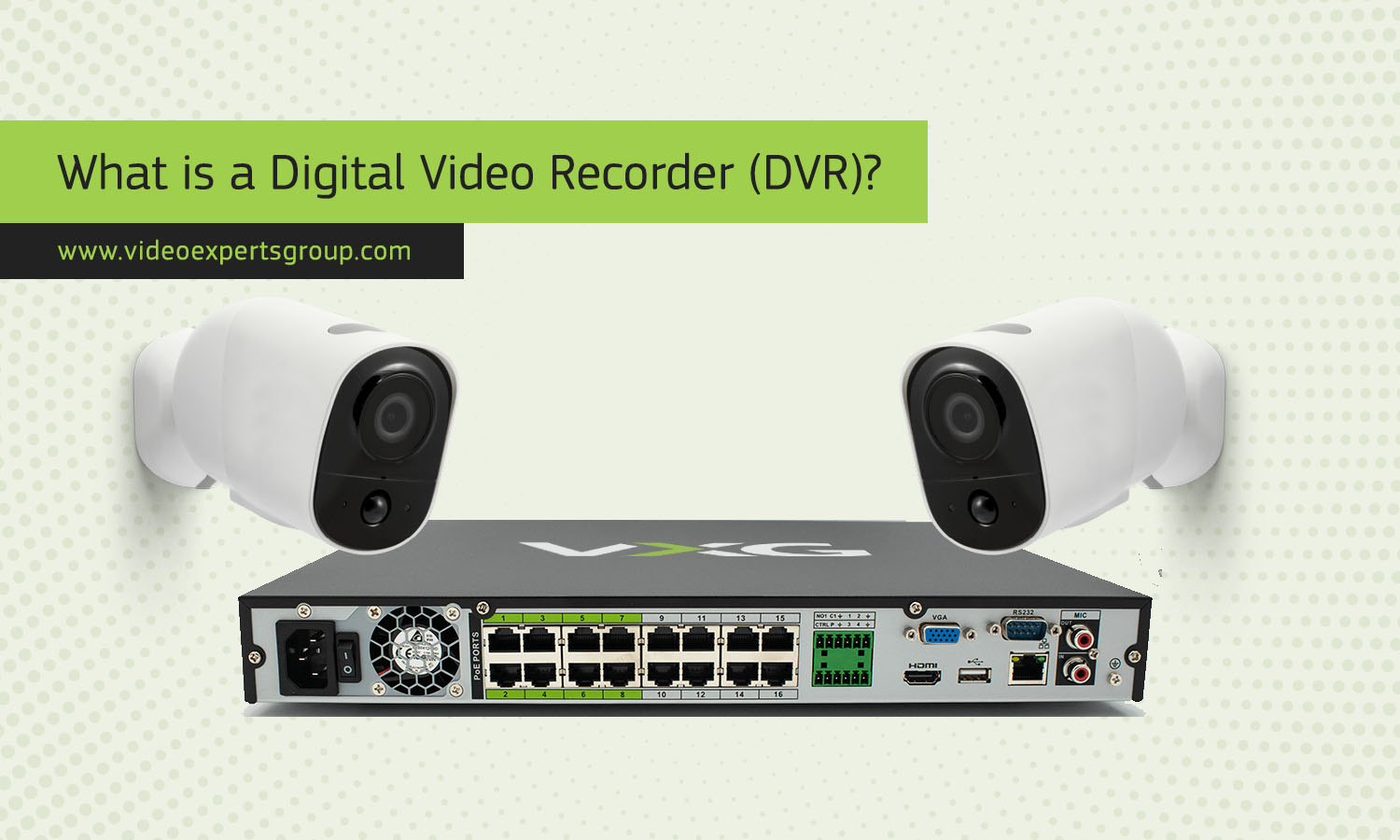
In the world of CCTV and security systems, video recording plays a central role in monitoring, evidence collection, and incident investigation. Among the most widely used recording devices is the DVR, a solution that has been powering analog and hybrid surveillance systems for years. Even with the rise of IP-based technologies, DVRs remain relevant due to their reliability, affordability, and ease of deployment. Understanding what a DVR is and how it works helps homeowners, businesses, and security professionals choose the right recording solution for their needs.
Meaning
DVR (Digital Video Recorder) is a device that receives video signals from security cameras, converts those signals into digital data, compresses them, and stores the recordings on a hard drive or other storage media. Unlike older analog recorders that relied on tapes, a DVR stores footage digitally, allowing for faster search, playback, backup, and remote access.
DVRs are most commonly used with analog cameras such as CVBS, AHD, HD-TVI, and HD-CVI. These cameras transmit video over coaxial cables directly to the DVR, which acts as the central hub of the surveillance system.
How DVR Works
A DVR operates as the brain of a traditional CCTV system. Each camera is physically connected to the DVR using coaxial cable, often combined with power delivery through separate wiring or a power splitter. The video signal arriving at the DVR is analog in nature, even when it is high definition.
Inside the DVR, the incoming video signal passes through an encoder that converts the analog feed into a digital format. This digital video is then compressed using codecs such as H.264 or H.265 to reduce file size while preserving image quality. The compressed footage is written to an internal hard disk drive, where it is organized by camera, date, and time.
The DVR continuously manages recording based on predefined settings. It can record nonstop, on a schedule, or only when motion is detected. When a user wants to review footage, the DVR decodes the stored video and displays it on a connected monitor or through a remote viewing application.
Key Functions
A DVR offers a range of essential functions that make it suitable for professional security use.
- Video recording and storage with configurable quality and frame rate
- Live viewing of all connected cameras in real time
- Playback and search by time, date, or event
- Motion detection and event-triggered recording
- Remote access via mobile apps or web browsers
- Backup of footage to USB devices or external drives
- User management with different access permissions
Many modern DVRs also include smart features such as line crossing alerts or basic video analytics, especially in hybrid or AI-enabled models.
Channels of DVR
The term channels in a DVR refers to the number of camera inputs the device supports. Each channel corresponds to one camera connection. Choosing the right number of channels is important for system scalability and future expansion.
- 4-channel DVRs are suitable for small homes or shops
- 8-channel DVRs are common for small to medium businesses
- 16-channel DVRs are used in offices, warehouses, and schools
- 32-channel and higher DVRs are designed for large facilities
A DVR cannot exceed its channel limit, meaning a 4-channel DVR will only support up to four cameras. Some hybrid DVRs allow a mix of analog and IP cameras, but the total number of channels remains fixed.
Advantages
DVR-based surveillance systems continue to be popular due to several practical benefits.
- Lower overall cost compared to full IP systems
- Stable and reliable performance with minimal network dependency
- Simple installation using existing coaxial cabling
- Centralized management of all camera feeds
- Consistent recording quality unaffected by network congestion
For locations with limited network infrastructure or where analog cameras are already installed, DVRs provide a cost-effective upgrade path to digital recording.
Disadvantages
Despite their strengths, DVRs also have limitations that should be considered.
- Less flexible compared to network-based recording solutions
- Limited camera distance without signal boosters
- Lower maximum resolution compared to modern IP cameras
- Physical cabling requirements increase installation complexity
- Scalability is restricted by fixed channel counts
As surveillance needs grow or require advanced analytics, DVR systems may become less suitable than newer technologies.
DVR vs. NVR
The comparison between DVR and NVR is one of the most common topics in CCTV system design. While both devices record video, they differ significantly in how they process and receive data.
A DVR works with analog cameras and performs video encoding internally. The cameras send raw video signals directly to the DVR. An NVR, or Network Video Recorder, works with IP cameras that encode video at the camera level and transmit it over a network.
DVR systems are generally more affordable and simpler for small installations. NVR systems offer higher resolutions, easier scalability, and advanced features but rely heavily on network quality. The choice between DVR and NVR depends on budget, infrastructure, and long-term surveillance goals.
FAQs
