HD vs. FHD: What are the Differences?
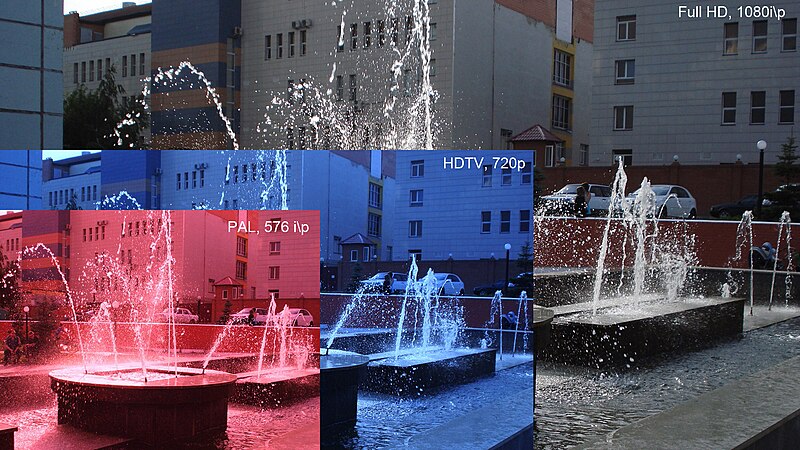
Screen resolution is one of those specs everyone recognizes, yet few people fully understand. Terms like HD and FHD appear on TVs, monitors, smartphones, cameras, and streaming platforms, often used interchangeably even though they are not the same. Choosing the wrong resolution can lead to blurry images, wasted money, or hardware that does not match your needs. This guide breaks down HD vs. FHD in plain language, explains how they differ in daily use, and helps you decide which option actually makes sense for you.
What is HD?
HD stands for High Definition and usually refers to a resolution of 1280 by 720 pixels. This is commonly called 720p, where the “p” means progressive scan. When HD first became mainstream, it was a huge step up from standard definition, delivering sharper images, better color detail, and a more cinematic viewing experience.
HD content is still widely used today, especially on smaller screens, entry-level TVs, budget monitors, and live broadcasts where bandwidth efficiency matters. Even though it is no longer considered cutting-edge, HD remains relevant in many everyday scenarios.
Advantages
- Lower hardware requirements compared to higher resolutions.
- Consumes less internet bandwidth for streaming and video calls.
- Works smoothly on older devices and budget hardware.
- Still looks clear on smaller screens such as smartphones and compact TVs.
Disadvantages
- Noticeably less sharp on larger screens.
- Limited detail for text-heavy tasks or professional work.
- Less future-proof as media standards continue to evolve.
- Not ideal for gaming or high-quality video editing.
What is FHD?
FHD stands for Full High Definition and refers to a resolution of 1920 by 1080 pixels, commonly known as 1080p. Compared to HD, FHD delivers significantly more detail, with over twice the number of pixels. This makes images sharper, text cleaner, and videos more immersive.
FHD has become the default standard for modern TVs, monitors, laptops, and online video platforms. It strikes a balance between image quality, performance, and affordability, which is why it remains extremely popular even as 4K becomes more common.
Advantages
- Much sharper image quality than HD.
- Better readability for text and detailed graphics.
- Ideal for gaming, movies, and productivity tasks.
- Wide support across devices, platforms, and content providers.
Disadvantages
- Higher bandwidth usage for streaming.
- Requires more powerful hardware than HD.
- May be unnecessary for very small screens.
- Slightly higher cost compared to HD-only devices.
What are the differences between HD and FHD?
The main difference between HD and FHD lies in resolution and pixel density. HD offers 1280 by 720 pixels, while FHD increases that to 1920 by 1080. This jump results in more detail, smoother edges, and better overall clarity.
On a small screen, such as a smartphone, the difference may be subtle. On larger displays like TVs and monitors, FHD is clearly superior, especially when watching movies, playing games, or working with documents. Another key difference is data usage. HD streams require less bandwidth, making them easier to watch on slower connections, while FHD needs more stable and faster internet.
Compatibility also matters. Most modern devices support both resolutions, but older hardware may struggle with FHD playback or multitasking at higher resolutions.
Which is better: HD or FHD?
There is no universal winner because the better option depends on how and where you plan to use it. HD is perfectly fine for basic tasks, smaller screens, video calls, and environments with limited bandwidth. It keeps costs down and reduces system load.
FHD is the better choice for most users today. It offers a noticeable upgrade in clarity, works well across entertainment and productivity, and provides a more future-ready experience. If you watch movies, play games, edit photos, or use a large display, FHD is worth it.
In short, choose HD for simplicity and efficiency, and FHD for quality and versatility.
FAQs
