PVR: Personal Video Recorder in CCTV
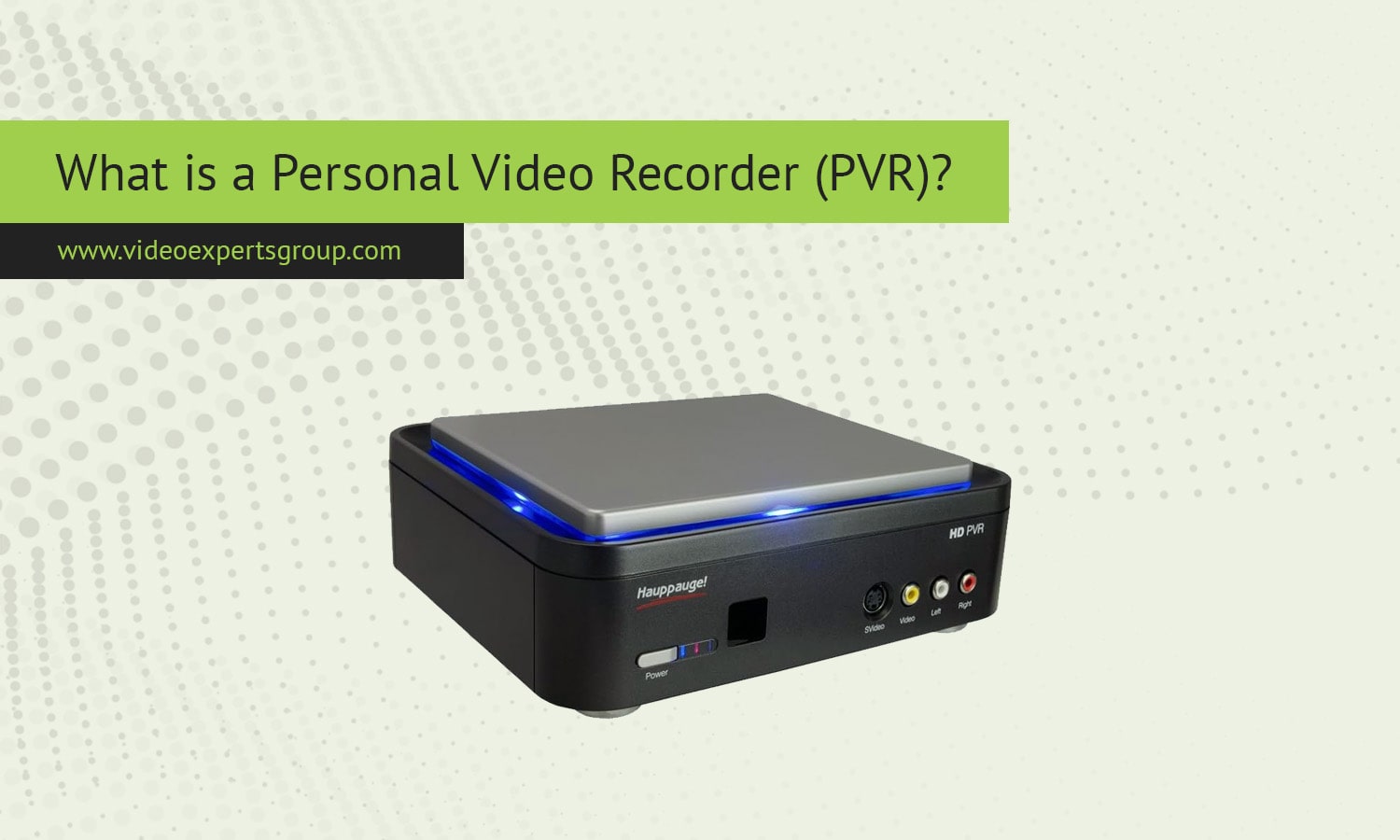
In the world of video surveillance, recording technology is just as important as the cameras themselves. A Personal Video Recorder, or PVR, in a CCTV context refers to a video recording system designed to capture, store, and manage footage from security cameras for personal or small-scale use. It gives property owners direct control over their surveillance data, allowing them to review events, store evidence, and monitor activity without relying entirely on external monitoring services. PVR systems are often used in homes, small offices, retail shops, and other environments where reliable video recording is needed but large enterprise systems would be excessive.
Meaning
A Personal Video Recorder in CCTV is a digital device that records video streams from security cameras onto internal storage such as a hard disk drive or solid-state drive. The term "personal" highlights that the system is typically owned and managed by the end user rather than by a large security control center. While the term PVR is widely known in television recording, in surveillance it describes a recorder focused on individual property protection, local control, and straightforward operation. It may work with analog cameras through video inputs or with digital cameras through network connections, depending on the model. The main purpose of a CCTV PVR is to ensure that video evidence is available when needed, whether for security review, incident investigation, or general monitoring.
Key functions
A PVR combines recording, management, and playback tools in one unit. Typical functions include:
- Continuous or scheduled video recording from connected cameras.
- Motion-based recording that saves storage by recording only when activity is detected.
- Multi-channel support to handle several cameras at the same time.
- Playback with pause, rewind, and fast search by date and time.
- Video backup to external drives or USB devices.
- User access control with passwords and permission levels.
- On-screen display of camera names, time, and recording status.
- Remote viewing through a local network or internet connection on supported models.
These features allow users not only to store video but also to quickly locate and review important moments.
How PVR works
A PVR receives video signals from cameras either through direct cable connections or via a network interface. The incoming video is processed by the recorder’s internal hardware, where it is compressed using video codecs to reduce file size while maintaining usable image quality. The compressed data is then written to the internal storage drive. Many PVR systems support multiple channels, meaning they can record several camera feeds simultaneously. Recording can be set to run continuously, on a schedule, or only when motion is detected in the scene. When a user wants to review footage, the system reads the stored files and displays them through a connected monitor or over a remote viewing application. Time and date indexing makes it possible to jump directly to a specific moment instead of watching hours of video. This structured storage and retrieval process turns raw camera feeds into organized, searchable security records.
Advantages
- Local control over surveillance footage without mandatory cloud storage.
- Reliable evidence storage for incidents and investigations.
- Cost-effective solution for homes and small businesses.
- Support for multiple cameras in a single system.
- Flexible recording modes that balance security and storage use.
- Simple operation suitable for non-technical users.
- Ability to work even without constant internet access.
For many users, the biggest benefit is independence. The footage stays under their control and can be accessed whenever needed.
Disadvantages
- Limited storage capacity compared to large enterprise servers.
- Risk of data loss if the device is damaged or stolen.
- Maintenance required for hard drives over long periods.
- May lack advanced analytics found in higher-end systems.
- Remote access features vary depending on the model.
While practical, a PVR should be placed in a secure location and backed up regularly to reduce the risk of losing important footage.
PVR vs. DVR
In CCTV terminology, DVR stands for Digital Video Recorder and is commonly used for systems that record video from analog cameras over coaxial cables. A PVR in surveillance can be considered a user-focused version of a DVR, emphasizing ease of use and personal ownership. Both devices convert and store video digitally, but DVR is a broader technical category, while PVR often implies a system intended for smaller installations and direct end-user management. In practice, many entry-level DVRs for homes function as PVRs, offering similar recording and playback features tailored for personal security needs.
PVR vs. NVR
An NVR, or Network Video Recorder, is designed specifically for IP cameras that send digital video over a network. Unlike a typical PVR that may support analog inputs, an NVR works with network-based cameras and often offers higher resolution support and advanced features such as intelligent video analytics. PVR systems are usually simpler and may focus on direct connections and basic monitoring tasks. NVR solutions are more scalable and common in modern IP surveillance, while PVR systems remain practical for smaller or mixed camera setups where simplicity and cost are priorities.
FAQs
