Remote Surveillance Trailer: A Complete Guide
Security threats do not stop at the edge of a building or inside a fenced property. Construction sites, remote infrastructure, public events, mining operations, and temporary projects often require reliable protection in locations where fixed security systems are either impractical or too expensive to install. This is where a remote surveillance trailer becomes one of the most effective modern security solutions.
A remote surveillance trailer combines advanced video monitoring technology, wireless connectivity, autonomous power systems, and mobile deployment into a single portable unit. Instead of building permanent surveillance infrastructure, organizations can deploy a mobile surveillance trailer exactly where it is needed and relocate it whenever operational priorities change.
Today, businesses, government agencies, contractors, utility providers, and law enforcement teams increasingly rely on surveillance trailers to monitor assets, prevent theft, improve safety, and maintain situational awareness in difficult environments. Solar-powered systems, AI-enabled analytics, remote access capabilities, and cloud video management have transformed the traditional trailer-mounted camera setup into a highly intelligent security platform.
This complete guide explains how a surveillance trailer works, what technologies it uses, where it is most effective, and how organizations can successfully implement a scalable mobile security strategy.
What is a Remote Surveillance Trailer?
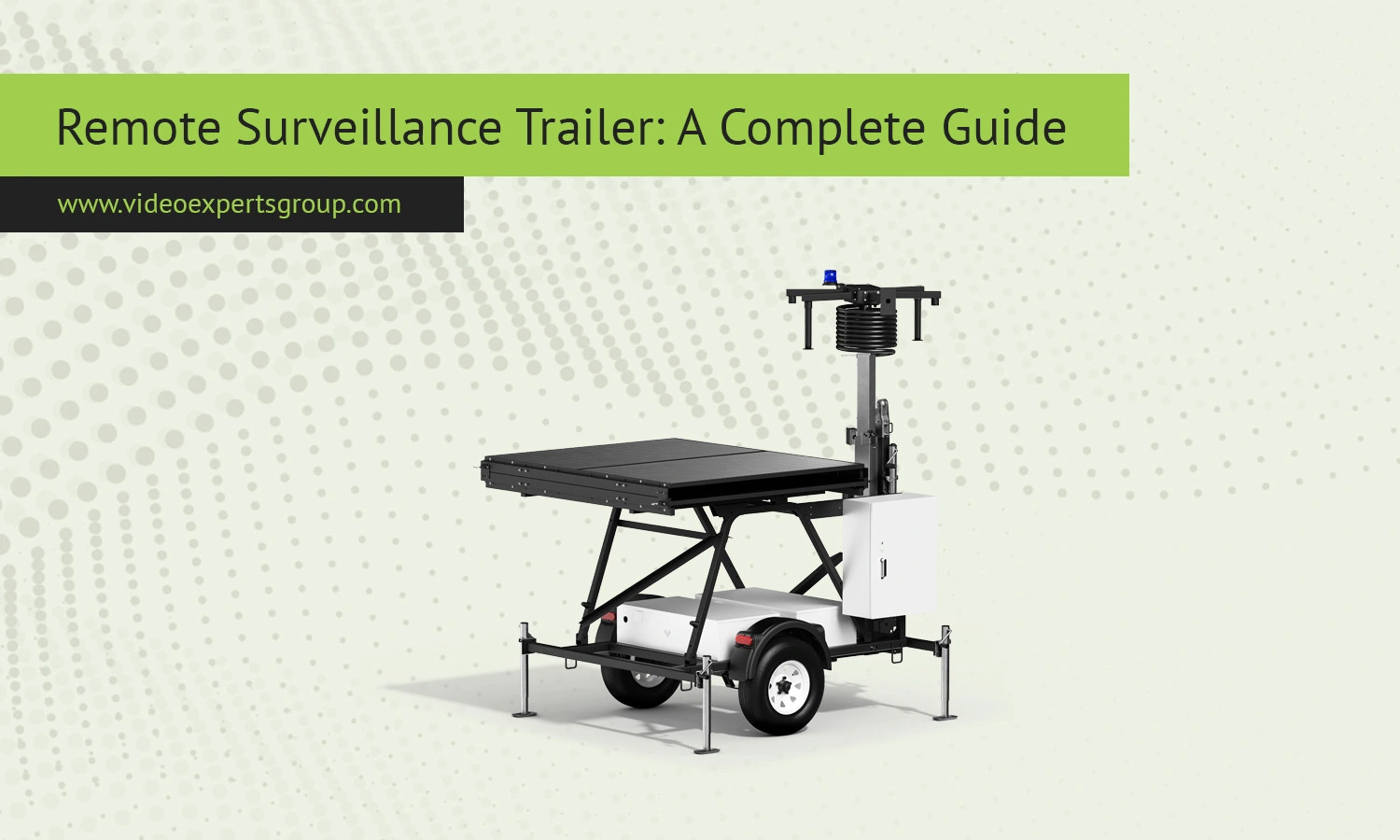
A remote surveillance trailer is a portable security platform that combines cameras, networking equipment, onboard power systems, and remote monitoring software into a towable trailer unit.
Unlike fixed CCTV installations, a mobile surveillance trailer can be rapidly deployed and repositioned as security needs evolve. Most systems are designed for fast setup and minimal human intervention, making them especially useful for temporary worksites, remote facilities, and emergency operations.
A typical surveillance trailer includes a telescoping mast with multiple security cameras mounted at elevated positions. The mast allows the cameras to monitor large areas with fewer blind spots. Depending on the application, the system may include PTZ cameras, thermal imaging, radar integration, license plate recognition, floodlights, sirens, or AI-powered analytics.
Many modern solar surveillance trailer solutions operate independently using solar panels and battery storage. This eliminates the need for external power sources and enables deployment in isolated areas without utility infrastructure.
Most systems also support remote access, allowing security personnel to:
- view live video feeds
- receive real-time alerts
- review recorded footage
- control PTZ cameras remotely
- manage multiple sites from one location
- trigger deterrence systems such as lights or speakers
The flexibility and scalability of a video surveillance trailer make it a valuable solution across many industries.
Key Components & Technology
Trailer Platform
The trailer itself serves as the foundation for the entire system. It is engineered for transportation durability and outdoor operation under harsh environmental conditions. Heavy-duty frames, stabilizing jacks, weatherproof enclosures, and anti-theft protections are common features.
Some models are compact for rapid deployment, while others are large industrial platforms capable of supporting advanced surveillance equipment and extended autonomous operation.
Telescoping Mast
The mast elevates cameras and communication devices above the surrounding environment. Heights typically range from 15 to 40 feet depending on the trailer design.
Greater elevation improves visibility, increases monitoring coverage, and reduces obstructions. Pneumatic and electric mast systems are commonly used for efficient deployment.
Surveillance Cameras
The cameras are the core of every remote surveillance trailer. Different camera types may be combined depending on operational requirements.
Common options include:
- fixed IP cameras
- PTZ cameras
- thermal cameras
- multi-sensor panoramic cameras
- night vision cameras
- license plate recognition cameras
High-resolution imaging is now standard, with many systems supporting 4MP, 8MP, or even higher resolutions for detailed evidence capture.
Power Systems
Power flexibility is one of the defining features of a mobile surveillance trailer.
Power sources may include:
- solar panels
- deep-cycle battery banks
- diesel generators
- hybrid power systems
- shore power connections
A solar surveillance trailer is especially valuable for long-term deployments in remote areas because it reduces fuel costs, maintenance requirements, and environmental impact.
Wireless Connectivity
Remote access depends on reliable communications infrastructure. Most surveillance trailers use:
- 4G LTE
- 5G cellular
- Wi-Fi bridges
- microwave links
- satellite communications
These technologies allow video streams and system alerts to be transmitted to remote monitoring centers in real time.
Video Management Software
The software platform is what transforms the hardware into a complete security ecosystem. Modern video management systems allow operators to:
- manage multiple surveillance trailers
- monitor live and recorded video
- configure alerts
- perform forensic searches
- integrate access control systems
- deploy AI-based analytics
Cloud-based platforms are increasingly popular because they simplify scalability and remote accessibility.
Artificial Intelligence and Analytics
Advanced analytics significantly improve operational efficiency by reducing false alarms and automating threat detection.
AI-enabled features may include:
- human detection
- vehicle detection
- intrusion zones
- loitering detection
- object abandonment alerts
- facial recognition
- crowd monitoring
These intelligent systems help security teams focus on genuine threats rather than manually monitoring screens for extended periods.
Audio and Deterrence Systems
Many video surveillance trailer deployments now include active deterrence capabilities such as:
- strobe lights
- warning sirens
- two-way audio
- pre-recorded voice announcements
- live operator communication
Visible deterrence often prevents criminal activity before it escalates.
Benefits
Rapid Deployment
A major advantage of a surveillance trailer is deployment speed. Traditional fixed surveillance systems may require trenching, wiring, permits, and lengthy installation processes. A mobile solution can often become operational within hours.
Mobility and Flexibility
Security priorities can change quickly. A mobile surveillance trailer can be moved between locations as needed without rebuilding infrastructure.
This flexibility is ideal for temporary projects, changing construction phases, or emergency situations.
Reduced Infrastructure Costs
Installing permanent surveillance systems in remote areas can be extremely expensive. Portable systems reduce the need for:
- electrical trenching
- fiber installation
- pole construction
- network infrastructure
Organizations can achieve broad security coverage without major capital construction expenses.
Autonomous Operation
Solar surveillance trailer configurations can operate for long periods with minimal human intervention. Battery backup systems ensure continued operation during low sunlight conditions or temporary outages.
Improved Crime Prevention
Visible surveillance systems deter theft, vandalism, trespassing, and unauthorized access. Construction sites and remote facilities frequently experience significant reductions in equipment theft after deploying mobile surveillance solutions.
Scalable Security Coverage
Organizations can expand surveillance coverage simply by adding additional trailers to their network. This scalability supports growing operations without requiring major redesigns.
Remote Monitoring Efficiency
Security personnel can manage multiple locations simultaneously through centralized video management platforms. This reduces staffing costs while improving response times.
Enhanced Safety
In industrial environments, remote monitoring improves worker safety by identifying hazards, unauthorized access, unsafe behavior, or emergency conditions in real time.
Main Applications
Construction Sites
Construction companies are among the largest users of remote surveillance trailer systems. Expensive equipment, tools, fuel, and materials make construction sites frequent targets for theft and vandalism.
Mobile surveillance provides:
- after-hours monitoring
- perimeter security
- safety oversight
- incident documentation
- remote project visibility
Critical Infrastructure
Utility providers use surveillance trailers to secure:
- power substations
- water treatment facilities
- pipeline projects
- telecommunications infrastructure
- renewable energy installations
Remote infrastructure often lacks permanent security systems, making portable monitoring solutions highly effective.
Public Events
Concerts, festivals, sporting events, and large public gatherings require temporary security coverage. A mobile surveillance trailer can monitor crowds, entrances, parking areas, and restricted zones without requiring permanent infrastructure.
Law Enforcement
Police departments deploy surveillance trailers for:
- crime prevention
- traffic monitoring
- special events
- temporary investigations
- disaster response
Rapid deployment capabilities are especially valuable during emergencies or high-risk situations.
Mining and Oil Operations
Remote industrial operations often face difficult environmental conditions and limited infrastructure availability. Solar surveillance trailer systems provide autonomous security monitoring in isolated locations.
Transportation and Logistics
Warehouses, shipping yards, ports, and logistics centers use video surveillance trailer solutions to monitor cargo handling areas, parking lots, and perimeter zones.
Agriculture
Large agricultural operations use surveillance trailers to monitor:
- equipment storage
- livestock areas
- remote fields
- fuel tanks
- irrigation systems
Autonomous solar-powered operation is especially useful in rural environments.
Implementation Checklist
Deploying a remote surveillance trailer successfully requires careful planning. Organizations should evaluate operational requirements, environmental conditions, and long-term scalability before selecting a system.
Define Security Objectives
Identify the primary purpose of the deployment. Objectives may include theft prevention, perimeter monitoring, safety oversight, traffic management, or evidence collection.
Evaluate Site Conditions
Assess terrain, lighting conditions, network coverage, environmental exposure, and available power sources. These factors influence equipment selection and deployment strategy.
Choose Appropriate Camera Technology
Select camera types based on operational needs. PTZ cameras may be necessary for large areas, while thermal imaging can improve nighttime detection.
Consider Power Requirements
Determine whether solar, generator, battery, or hybrid systems are most appropriate for the deployment duration and climate conditions.
Plan Connectivity
Reliable communications are essential for remote monitoring. Verify cellular coverage or alternative connectivity options before deployment.
Implement Centralized Management
Using a professional video management platform improves operational efficiency, scalability, and system integration.
Deploy Intelligent Analytics
AI-based analytics reduce false alarms and improve threat detection accuracy. Modern analytics can dramatically increase monitoring effectiveness.
Establish Maintenance Procedures
Routine inspections help ensure reliable long-term operation. Maintenance may include battery checks, solar panel cleaning, firmware updates, and camera calibration.
Use a Scalable Security Platform
Organizations managing multiple surveillance assets should consider a unified cloud-based video management solution such as VXG Security System. VXG provides centralized video management, remote device control, cloud recording, AI analytics integration, and scalable deployment capabilities for modern mobile surveillance operations.
Whether managing a single mobile surveillance trailer or an enterprise-wide fleet of video surveillance trailer deployments, a scalable platform can simplify operations and improve visibility across all monitored locations.
FAQs
