RG-11 Coax Cable: Features, Key Uses, Comparison
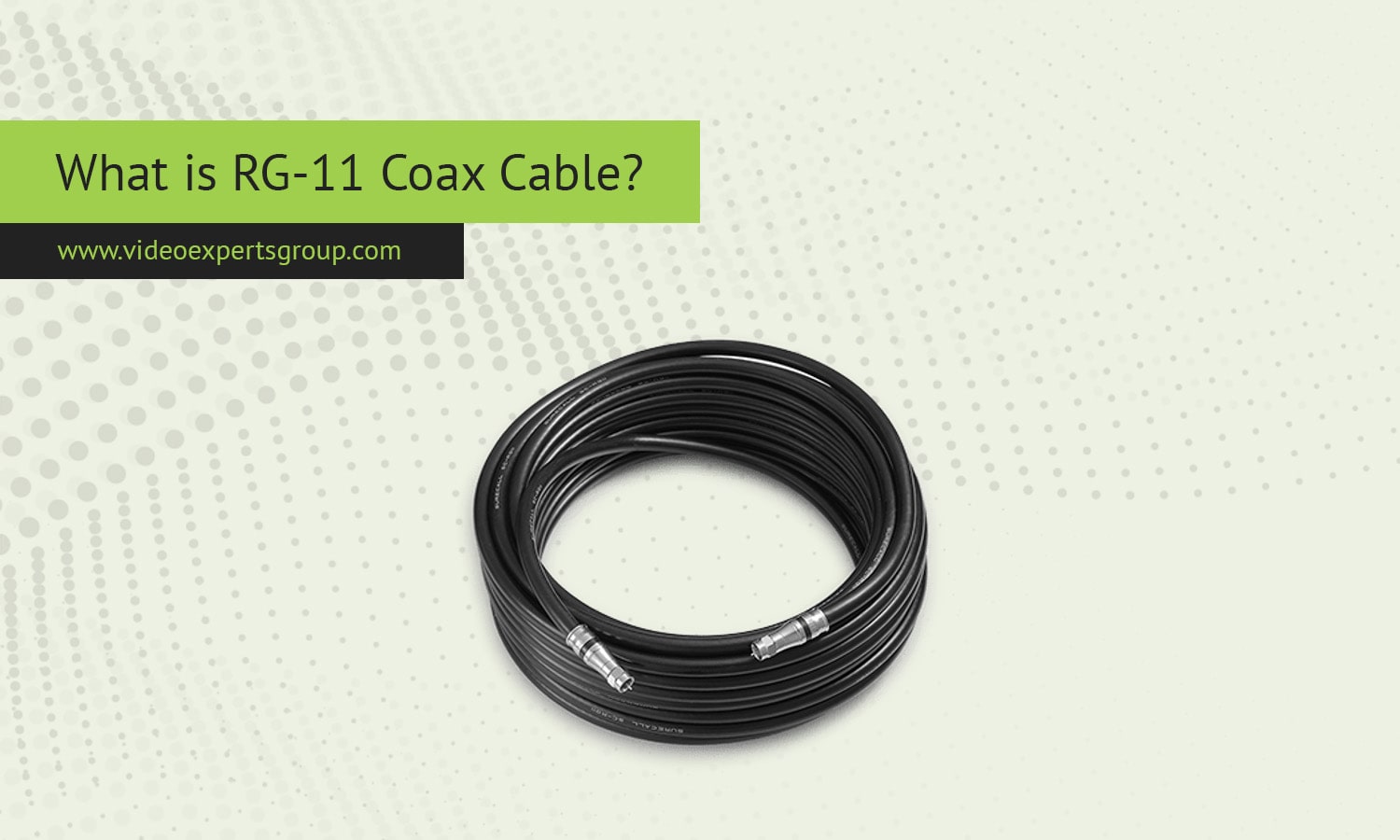
Coaxial cables remain a critical part of modern communication systems, even as fiber and wireless technologies continue to expand. In many installations, especially those covering long distances, signal quality depends not only on the cable itself but also on the connector that terminates it. One common example is the RG-11 coaxial cable connector, a component designed to support high-performance signal transmission in demanding environments.
Meaning
An RG-11 cable is a connector specifically designed to fit RG-11 coaxial cable. RG-11 is a thick, low-loss coaxial cable commonly used for long cable runs where signal attenuation must be kept to a minimum. The connector ensures a secure mechanical connection and proper electrical continuity between the cable and the connected device.
Unlike smaller coaxial cables, RG-11 requires connectors that can handle its larger diameter and solid construction. These connectors are engineered to maintain impedance consistency and shielding integrity, which are essential for reliable signal transmission.
Key features
- Designed for the larger diameter of RG-11 coaxial cable.
- Supports low signal loss over long distances.
- Maintains consistent impedance for stable performance.
- Strong shielding to reduce interference and noise.
- Durable construction for indoor and outdoor installations.
- Available in compression, crimp, or twist-on styles.
These features make RG-11 connectors suitable for professional-grade installations where performance and reliability are priorities rather than convenience.
Key uses
The RG-11 coaxial cable connector is most often used in applications that require long cable runs without significant signal degradation. One of the most common uses is in cable television infrastructure, especially between street-level distribution points and buildings.
RG-11 connectors are also used in satellite installations, broadband internet connections, and some closed-circuit video systems. In large residential buildings, campuses, or commercial facilities, RG-11 is chosen to bridge long distances before transitioning to thinner cables closer to the endpoint.
Because of its low attenuation, RG-11 with the proper connector is well suited for outdoor runs, underground conduits, and scenarios where repeaters or amplifiers are not practical.
RG-11 vs. RG-6
RG-11 and RG-6 are both widely used coaxial cable types, but they serve different purposes. RG-6 is thinner, more flexible, and easier to install, making it ideal for short to medium cable runs inside homes and offices.
RG-11, by contrast, is thicker and less flexible but offers much lower signal loss over distance. This makes it the better choice for long runs, typically over 150 feet. As a result, RG-11 connectors are larger and more robust than RG-6 connectors.
In many systems, RG-11 is used for the main feed, while RG-6 handles shorter internal connections. Choosing the correct connector for each cable type is essential to maintain signal quality and avoid installation issues.
FAQs
