UHD vs. HD: Which Resolution is Better?
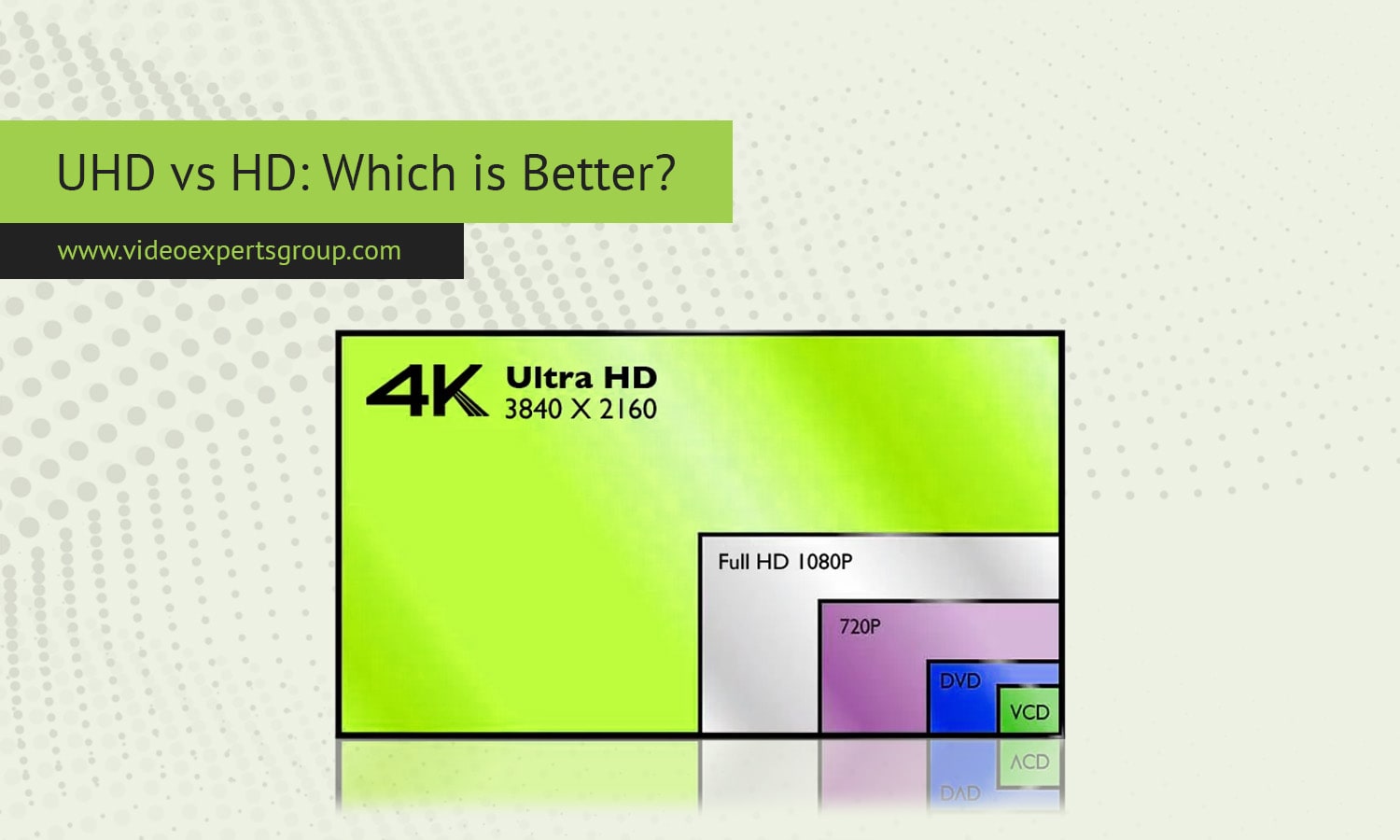
Screen resolution has become one of the most talked about features in TVs, monitors, smartphones, and cameras. Terms like HD and UHD are often used in marketing, but many people are unsure what they actually mean in everyday use. Choosing the right resolution is not only about sharper images but also about content availability, hardware requirements, and budget. Understanding the real differences between UHD and HD makes it easier to decide which option fits your needs.
Difference between UHD and HD
Meaning
HD stands for High Definition. It usually refers to a resolution of 1280 x 720 pixels, known as 720p, or 1920 x 1080 pixels, known as Full HD or 1080p. For many years, HD has been the standard for television broadcasts, streaming platforms, and computer monitors.
UHD stands for Ultra High Definition. In most consumer devices, UHD means a resolution of 3840 x 2160 pixels, often called 4K UHD. It contains four times as many pixels as Full HD, which is why the image can appear much sharper and more detailed.
Key characteristics
- HD offers clear and detailed images compared to older standard definition formats.
- UHD provides significantly higher pixel density and finer detail.
- HD content is widely available and supported by almost all devices.
- UHD content is growing fast but still depends on compatible hardware and services.
- HD works well on smaller screens and typical viewing distances.
- UHD shows its advantages most clearly on larger screens or when viewed up close.
The main technical difference lies in pixel count. While HD focuses on a balance between quality and accessibility, UHD aims to deliver a more immersive and lifelike viewing experience.
Which is Better, UHD or HD?
Resolution and pixels
Resolution is often the first factor people compare. Full HD displays around two million pixels on the screen, while UHD displays over eight million. This increase allows UHD to show finer textures, smoother edges, and more detail in complex scenes. However, the difference is not always noticeable on smaller screens or from far viewing distances.
If you are using a smartphone, laptop, or a TV under 40 inches, HD or Full HD can still look very sharp. UHD becomes more noticeable on large televisions, professional monitors, and projection systems.
Image quality
Image quality is influenced by more than resolution alone. Color accuracy, contrast, brightness, and processing all play important roles. UHD displays often come with newer technologies such as better color support and improved dynamic range, which can enhance picture quality beyond just extra pixels.
That said, a high quality HD screen can still outperform a low quality UHD screen. Resolution improves detail, but it does not automatically guarantee better colors or contrast.
Best use cases
HD remains a practical choice for everyday use. It is ideal for standard TV viewing, online videos, video calls, office work, and gaming on modest hardware. Many broadcast channels and streaming platforms still rely heavily on HD.
UHD is better suited for cinematic experiences, large living room TVs, professional photo and video editing, and modern gaming consoles. It is also useful for multitasking on large monitors, where extra screen space improves productivity.
Requirements and cost
HD is less demanding in terms of hardware and internet speed. Most devices can handle HD content smoothly, and storage requirements are lower. This makes HD more affordable overall.
UHD requires more powerful hardware, faster internet connections for streaming, and larger storage capacity for local files. UHD displays and compatible devices also tend to cost more, although prices have dropped significantly in recent years.
In short, HD offers excellent value and wide compatibility, while UHD delivers higher detail and future ready performance for those who can support it.
FAQs
