What is a Very High Bitrate Digital Subscriber Line (VDSL)?
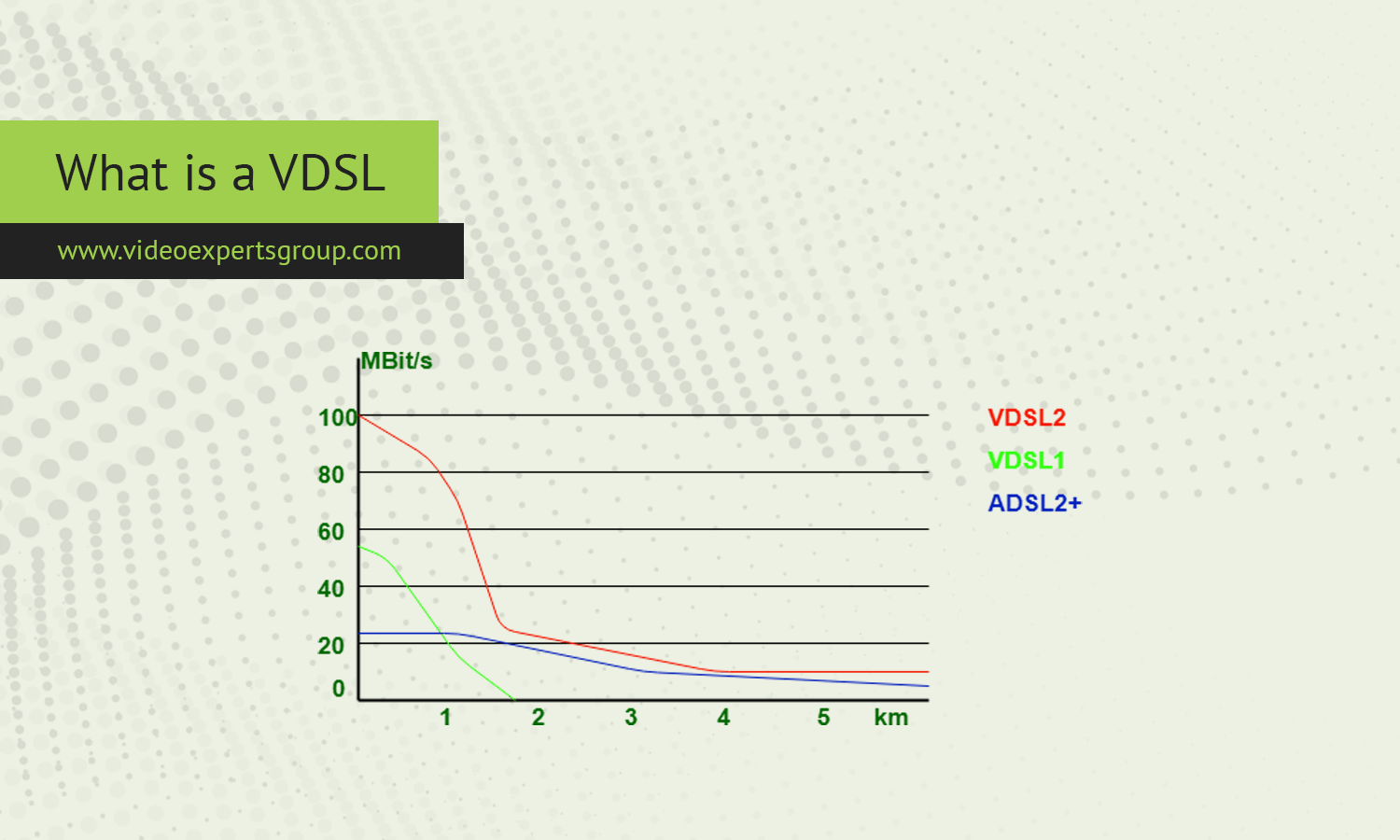
Internet connectivity has evolved quickly over the last few decades, bringing faster and more reliable access to homes and businesses. One of the technologies that helped bridge the gap between traditional DSL connections and modern high speed networks is Very High Bitrate Digital Subscriber Line, commonly known as VDSL. It delivers stronger performance than earlier copper based broadband methods and remains widely used in many regions. This article explains what VDSL is, how it operates, the advantages it offers, and how it compares with ADSL and fiber connections.
Meaning
Very High Bitrate Digital Subscriber Line, or VDSL, is a broadband technology that transmits internet data over existing copper telephone lines. It belongs to the family of DSL technologies but offers much higher data rates than the earlier Asymmetric Digital Subscriber Line. VDSL was developed to provide faster speeds without requiring major infrastructure changes, making it an appealing choice for areas where full fiber rollout is not yet available.
The main purpose of VDSL is to provide high speed internet access for activities such as HD video streaming, video conferencing, online gaming, and business communication. It is often deployed in the last mile segment of the network, where copper pairs connect subscribers to a nearby distribution cabinet or node.
How VDSL Works
VDSL works by transmitting data at higher frequencies than ADSL over the same copper telephone wires. To achieve higher speeds, VDSL reduces the distance that data must travel over copper. Instead of running directly to central offices, the connection typically goes to a roadside cabinet or neighborhood node equipped with a digital subscriber line access multiplexer. Fiber optic cables often link the cabinet to the service provider’s core network, while the final leg to the home uses copper wiring.
1. Frequency spectrum usage
VDSL uses a broader frequency range than ADSL, allowing it to transmit more data. Different frequency bands are allocated for upstream and downstream communication, which helps improve performance and stability.
2. Shorter copper loops
Because copper wires introduce signal loss over distance, VDSL is designed to operate over shorter loops. The closer the user is to the cabinet or distribution point, the better the achievable speed.
3. Modulation and signal processing
Advanced modulation methods are used to pack more data onto copper lines. These methods help maximize throughput while reducing errors caused by interference and noise.
4. VDSL2 enhancements
The second generation of VDSL, known as VDSL2, offers even higher speeds and improved performance across multiple profiles. It can operate in different frequency bands depending on local infrastructure and regulations.
Key Features
VDSL offers a combination of performance and practicality that makes it valuable in many regions. Notable features include:
- Support for much higher speeds than ADSL over short distances.
- Compatibility with existing copper telephone infrastructure.
- Low latency suitable for video conferencing and online gaming.
- Option for symmetric or asymmetric data profiles depending on deployment.
- Improved noise reduction techniques for better stability.
- Efficient performance when paired with fiber to the cabinet networks.
Benefits
VDSL delivers several benefits to both users and service providers.
- Faster speeds: VDSL significantly increases download and upload speeds compared to ADSL.
- Cost efficiency: Deployment requires minimal changes to existing copper lines, reducing installation costs.
- Strong performance for modern applications: Streaming, cloud services, and remote work all benefit from higher throughput.
- Quick rollout: Providers can extend high speed access to communities without full fiber upgrades.
- Flexibility: VDSL can coexist with voice services on the same line without interference.
DSL Technologies
DSL technology encompasses a few variations, each designed for specific use cases or environments. The primary DSL types include:
-
ADSL (Asymmetric Digital Subscriber Line): ADSL is the most common form of DSL for residential use. It offers higher download speeds than upload speeds, which is ideal for activities like streaming, browsing, and downloading content, as users typically consume more data than they upload.
-
SDSL (Symmetric Digital Subscriber Line): In contrast to ADSL, SDSL provides equal download and upload speeds. This is more suitable for business environments where file sharing, video conferencing, or uploading large amounts of data are essential.
-
VDSL (Very High Bitrate Digital Subscriber Line): VDSL offers faster speeds than both ADSL and SDSL, with higher download and upload rates. VDSL is capable of supporting more demanding services, like HD video streaming and online gaming, but is often only available in areas close to the service provider's infrastructure.
-
HDSL (High Bitrate Digital Subscriber Line): HDSL is typically used in business and enterprise settings to deliver high-speed connections over short distances. It is an older form of DSL and is gradually being replaced by faster technologies like VDSL.
VDSL vs. ADSL
Although both technologies rely on copper wiring, there are clear differences between VDSL and ADSL.
Speed
VDSL delivers much faster speeds than ADSL because it uses a wider frequency range. ADSL speeds often struggle with bandwidth heavy applications, while VDSL supports high resolution streaming and advanced online services.
Distance limitations
ADSL works over longer distances but with lower speeds. VDSL works best at short distances, usually within a few hundred meters of the distribution cabinet. As distance increases, VDSL performance drops more sharply than ADSL.
Infrastructure
Both use copper lines, but VDSL often pairs with fiber backhaul to enhance performance. This hybrid setup makes it a step closer to full fiber networks.
Best use cases
VDSL is ideal for users who need faster speeds and live close to roadside cabinets. ADSL remains more suitable in rural or remote areas where infrastructure is farther from homes.
VDSL vs. Fiber
Fiber to the home is considered the modern gold standard for internet connectivity. However, VDSL continues to be a useful alternative in many situations.
Performance
Fiber delivers uniform high speed performance regardless of distance, while VDSL speed decreases as copper length increases.
Reliability
Fiber is not affected by electrical interference or line noise. Copper can experience signal issues depending on line quality and environmental factors.
Cost and availability
Fiber networks require new infrastructure installations, which can be expensive. VDSL uses existing copper networks, making it more accessible and quicker to deploy in many areas.
Future potential
Fiber networks offer greater long term potential due to virtually unlimited bandwidth. VDSL remains a transitional technology, serving as a bridge until fiber becomes more widespread.
