Port 554: RTSP, Uses, Comparison
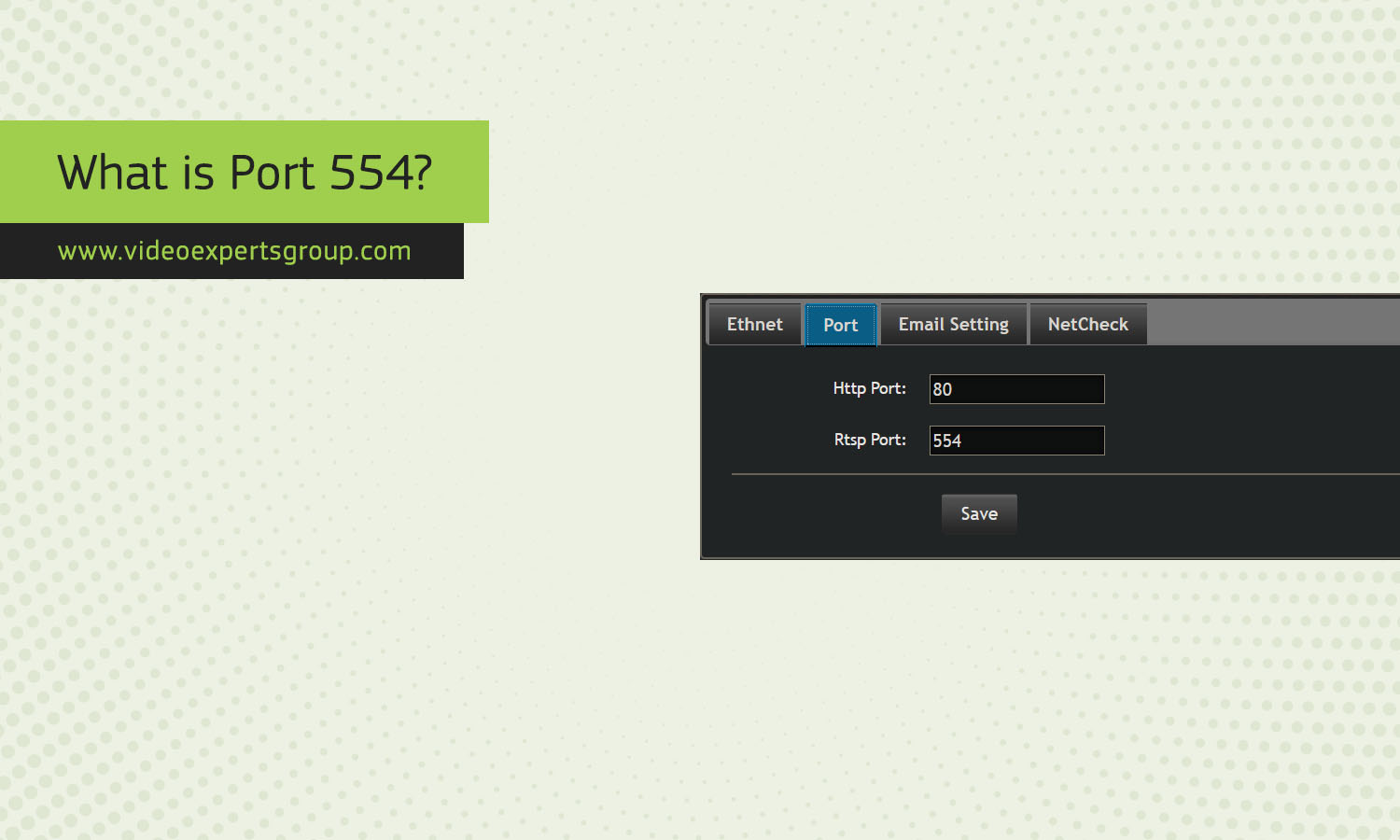
Port 554 is a well known network port assigned to the Real Time Streaming Protocol, or RTSP. It plays a central role in delivering live video and audio from devices such as IP cameras, NVRs, and media servers to clients like monitoring software, mobile apps, and browsers. Because modern surveillance and streaming systems rely on real time delivery rather than file downloads, port 554 often appears in firewall rules, router forwarding settings, and security audits. Understanding what travels through this port and how it behaves helps administrators keep streams accessible without exposing devices to unnecessary risk.
Meaning
Port 554 is the default TCP and UDP port reserved for RTSP, a control protocol used to establish and manage multimedia streaming sessions. RTSP itself does not carry the video payload. Instead, it negotiates how media will flow between a server and a client, including stream URLs, codecs, timing, and transport method. After negotiation, the actual media packets are typically delivered over RTP on dynamically assigned ports, while RTSP control messages continue through port 554.
In practical terms, when a video player connects to an IP camera using an address such as rtsp://device-ip/stream, it contacts port 554 on that device to request the stream. The camera responds with session parameters, and playback begins in real time. Because port 554 is standardized, most cameras and video platforms enable it by default.
Key details
- Protocol association: Officially assigned to RTSP by IANA.
- Transport: Supports both TCP and UDP. TCP is common across the internet, UDP is common in local networks.
- Role: Session setup, control commands, and stream negotiation rather than media transport.
- Typical devices: IP cameras, NVRs, DVRs with IP output, media servers, video encoders.
- Default state: Often open on surveillance devices unless disabled or firewalled.
- Address format: Accessed through RTSP URLs containing IP, port, and stream path.
- Firewall impact: Blocking port 554 prevents remote RTSP connections even if the device is reachable.
Uses
The most widespread use of port 554 is IP video surveillance. Cameras expose live feeds through RTSP so that recorders and viewing clients can subscribe to streams without proprietary software. This allows interoperability across brands and platforms. For example, a network video recorder may automatically discover cameras by scanning port 554 and pulling RTSP stream paths.
Media streaming servers also use port 554 to deliver live broadcasts, IPTV channels, and low latency feeds to decoders or players. Because RTSP supports play, pause, and seek commands, it can control time shifted playback or camera PTZ control in addition to video delivery.
In industrial and scientific environments, port 554 supports machine vision systems and remote monitoring, where sensors or cameras send real time visuals to control software. Developers also rely on it during testing, using RTSP players or libraries to ingest camera streams into analytics or AI pipelines.
Vulnerabilities
Leaving port 554 exposed to the internet can create several security issues. Many cameras ship with weak or default credentials, and attackers routinely scan networks for open RTSP ports to attempt unauthorized access. If authentication is absent or misconfigured, the attacker may view live video or harvest stream URLs.
Another concern is device fingerprinting. RTSP responses often reveal manufacturer details, firmware versions, or stream structure. This information helps attackers identify exploitable models and target known vulnerabilities.
Denial of service is also possible. Continuous connection attempts or malformed RTSP requests can overwhelm low power cameras or recorders, interrupting video availability. Some legacy devices have buffer overflow flaws in their RTSP parsers, allowing remote code execution if exploited.
To reduce risk, administrators commonly restrict port 554 access to trusted networks or VPNs, change default credentials, update firmware, and disable RTSP when not required. Many deployments also remap the external port to a nonstandard number to reduce automated scanning noise, although this alone does not provide strong security.
Port 554 vs. port 8554
Port 8554 is an alternative port often used for RTSP services when administrators prefer not to expose the default 554. Functionally, both ports can carry RTSP traffic and behave identically once configured. The difference lies mainly in convention and network policy.
- Port 554: Standard RTSP port recognized by most clients automatically.
- Port 8554: Common alternate chosen for testing, secondary streams, or NAT mapping.
- Compatibility: Some software assumes 554 unless another port is specified.
- Security posture: Changing to 8554 reduces automated scans but does not replace authentication or encryption.
- Deployment pattern: ISPs or firewalls that block 554 sometimes allow 8554, making remote access easier.
In practice, systems may expose internal RTSP on 554 and map external access to 8554 through a router. Clients then connect using rtsp://public-ip:8554/stream while the device continues to operate on its default port internally.
FAQs
