Bullet Camera: Features, Benefits, Comparison
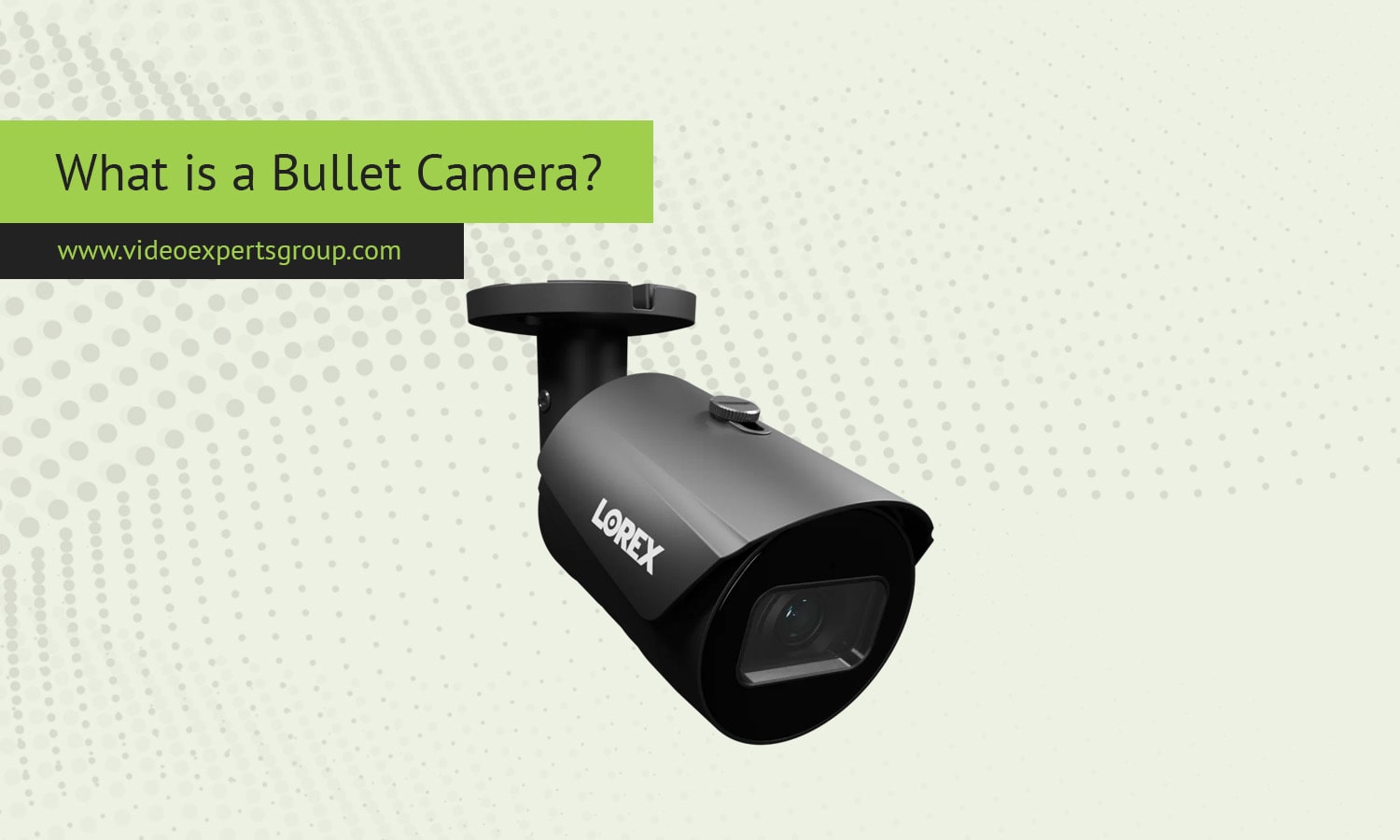
Bullet cameras are one of the most recognizable types of security cameras thanks to their elongated, cylindrical shape. You often see them mounted on exterior walls, poles, and building corners, clearly pointing toward driveways, perimeters, or entrances. Their visible presence alone can act as a deterrent, while their design supports long range viewing and stable outdoor performance. For many surveillance projects that require distance coverage and weather resistance, bullet cameras remain a practical choice.
Meaning
A bullet camera is a fixed surveillance camera housed in a tubular body with a lens at the front and a mounting bracket at the rear. The name comes from its resemblance to the shape of a bullet or cylinder. Inside the housing are the image sensor, lens assembly, and often infrared or white light LEDs for night illumination. The body typically includes a sunshield or hood to reduce glare and protect the optics from rain and direct sunlight. Bullet cameras are designed mainly for directional, long range monitoring rather than wide ceiling coverage.
How Bullet Camera Works
The camera mounts to a wall, ceiling, or pole using an adjustable bracket. During installation, the installer positions the camera by rotating and tilting the bracket until the desired field of view is achieved. The lens focuses incoming light onto the sensor, which converts it into a digital signal. The onboard processor manages exposure, color, noise reduction, and compression, then transmits video to a recorder or network system. Many modern bullet cameras use PoE, so one Ethernet cable provides both power and data.
For night operation, infrared LEDs around the lens emit invisible light that reflects off objects in the scene. The sensor captures this reflected light to produce a monochrome image. Because the lens sits behind a flat glass window and a sunshade extends above it, stray reflections and rain droplets are less likely to degrade the image compared to enclosed designs.
Features
- Cylindrical weatherproof housing: Designed for outdoor exposure and directional viewing.
- Integrated sunshield: Reduces glare and protects the lens from rain.
- Long focal length lenses: Supports narrow, distant coverage.
- Infrared or white light LEDs: Night visibility at extended ranges.
- Adjustable mounting bracket: Flexible aiming after installation.
- High resolution sensors: Commonly 4MP, 8MP, and higher.
- PoE connectivity: Single cable power and data.
- Outdoor durability: Sealed housings for dust and moisture resistance.
Benefits
- Strong visual deterrent: Clearly visible direction of monitoring.
- Long range clarity: Suitable for perimeters and large outdoor areas.
- Weather resilience: Designed for rain, sun, and temperature changes.
- Stable image quality: Minimal glare due to hooded lens design.
- Easy servicing: Accessible front glass and external body.
- Flexible mounting: Works on walls, poles, and corners.
These strengths make bullet cameras a reliable option for exterior surveillance where coverage distance and environmental resistance matter more than discretion.
Best Applications
- Building perimeters: Monitoring fences, walls, and boundaries.
- Parking areas: Capturing vehicles and movement across lots.
- Driveways and gates: Directional entry monitoring.
- Industrial yards: Long range coverage in open spaces.
- Rural or low light sites: Extended infrared illumination.
- Visible deterrence zones: Areas where presence matters.
Bullet Camera vs. Dome Camera
Dome cameras enclose the lens inside a hemispherical cover that protects against tampering and hides viewing direction. They are widely used indoors or in public interiors where equipment may be touched. However, the dome surface can collect dust or create internal reflections that affect night clarity.
Bullet cameras keep the lens exposed behind a flat window with a protective hood. This improves night contrast and simplifies cleaning. Bullets also support longer lenses for distance viewing. Domes are more discreet and vandal resistant, while bullets are more visible and better for long range outdoor scenes.
Bullet Camera vs. Turret Camera
Turret cameras use a compact ball-and-socket design without a tubular body. They are less visually intrusive and easier to align precisely because the lens direction is visible during installation. Turrets also avoid infrared reflection issues common in dome cameras.
Bullet cameras extend outward and clearly indicate where they point, which can deter unwanted activity. Their larger housings accommodate longer lenses and stronger illumination for distance targets. Turrets are ideal for general coverage and close range scenes, while bullets excel in outdoor directional monitoring and long range observation.
FAQs
