SRAM (Static Random-Access Memory) Understanding
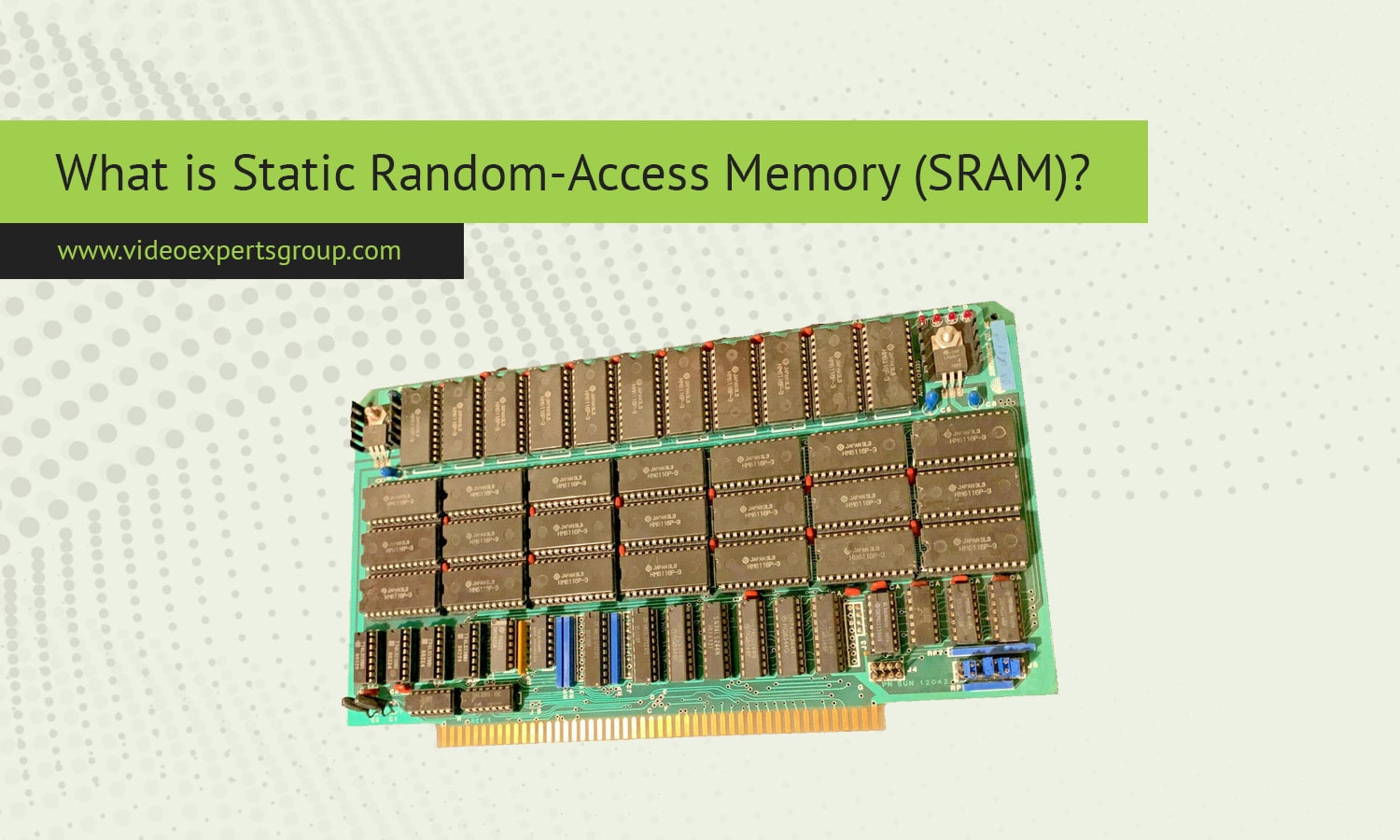
Speed and reliability play a major role in system performance. Among various types of memory, SRAM, or Static Random-Access Memory, is known for its fast operation and stable data retention without frequent refreshing. It is widely used in processors, cache systems, and other high-performance digital devices.
Definition
Static Random-Access Memory (SRAM) is a type of semiconductor memory that retains data as long as power is supplied. Unlike Dynamic RAM (DRAM), which stores data in capacitors and requires periodic refreshing, SRAM stores data using flip-flops — electronic circuits made of transistors that hold each bit of information in a stable state.
SRAM is called “static” because it doesn’t need to be refreshed continuously. Each bit remains constant as long as the device remains powered, offering faster access times than other memory types.
SRAM Architecture
SRAM is built from bistable latching circuits that can hold one bit of data. Typically, each memory cell consists of six transistors (6T) — four that form two cross-coupled inverters, and two that act as access transistors to control read and write operations.
The main components of an SRAM cell include:
- Storage cell: Stores the binary data (0 or 1).
- Word line: Selects the cell for reading or writing.
- Bit lines: Carry the data being read or written.
- Address decoder: Determines which cell to access.
- Sense amplifier: Detects and amplifies the small voltage difference when reading data.
This architecture allows fast data access but requires more transistors per cell, making SRAM more expensive and larger than DRAM.
What is SRAM Used For?
SRAM is used where high-speed memory is essential. Common applications include:
- CPU caches (L1, L2, L3): SRAM stores frequently accessed data to improve processor performance.
- Embedded systems: Used in microcontrollers and routers for quick data handling.
- Networking hardware: Routers and switches rely on SRAM for buffering and lookup tables.
- Graphics cards: Temporary storage for high-speed rendering tasks.
- Consumer electronics: Found in cameras, smartphones, and other devices requiring rapid data access.
Because of its stability and speed, SRAM plays a crucial role in improving the responsiveness of modern digital devices.
Advantages
SRAM offers several key benefits:
- Very fast access time: Faster than DRAM or other memory types.
- No refresh required: Data remains stable as long as power is supplied.
- Reliable operation: Less susceptible to electrical noise.
- Low latency: Ideal for high-performance computing environments.
However, it is more expensive and larger in size per bit compared to DRAM, limiting its use to smaller, performance-critical applications.
SRAM vs. RAM
The term RAM (Random-Access Memory) refers to any memory that allows data to be read and written directly in any order. Both SRAM and DRAM are types of RAM.
Key difference:
- SRAM retains data statically (no refresh needed).
- RAM (commonly meaning DRAM) needs constant refreshing to maintain data.
Thus, SRAM is a subset of RAM, optimized for speed and stability, while general RAM (DRAM) is optimized for cost and capacity.
SRAM vs. DRAM
While both are volatile memory types, they differ in structure and performance:
Data Storage:
- SRAM uses flip-flops for each bit.
- DRAM uses a single capacitor and transistor.
Speed:
- SRAM is significantly faster.
- DRAM is slower but denser.
Power Consumption:
- SRAM consumes more power when active but none for refreshing.
- DRAM uses less per bit but needs constant refreshing.
Cost and Density:
- SRAM is expensive and larger per bit.
- DRAM is cheaper and allows higher storage capacity.
In short, SRAM is used for speed-critical components like caches, while DRAM is used for main system memory.
FAQs
