NVR vs DVR: Which Is Better for Your Security Cameras?
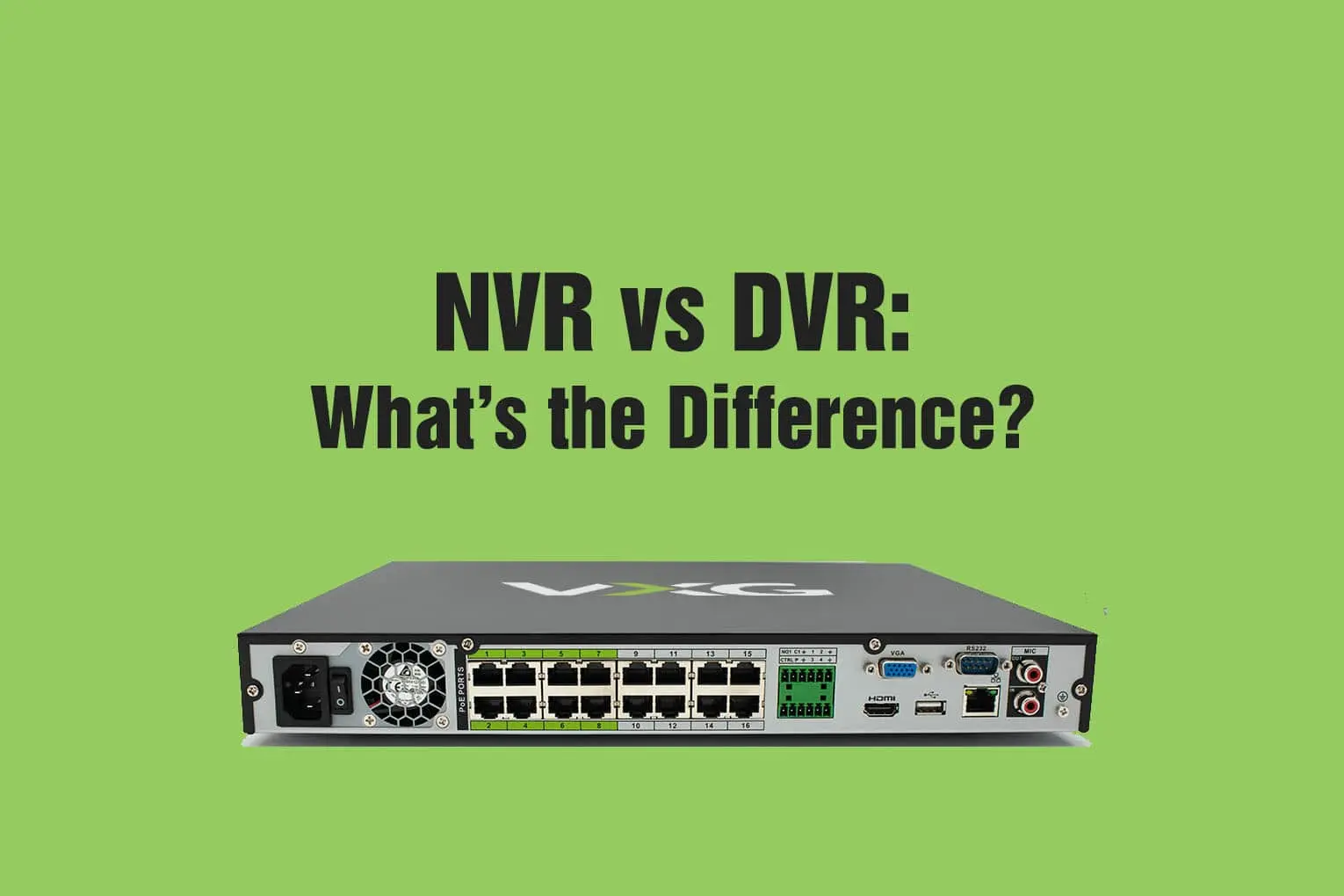
Choosing between an NVR and DVR system is one of the most important decisions when building a security camera setup. Both technologies are designed to record and manage surveillance footage, but they work in very different ways. The right option depends on your budget, camera type, installation preferences, image quality expectations, and future expansion plans.
For years, DVR systems dominated the security camera market because they were affordable and reliable. Today, NVR systems have become increasingly popular thanks to higher video quality, easier scalability, and support for modern IP cameras. While both systems can protect homes and businesses effectively, understanding their differences will help you avoid compatibility issues and unnecessary expenses.
This guide explains how DVR and NVR systems work, their advantages and disadvantages, and which option is better for different security camera setups.
What Is a DVR System?
DVR stands for Digital Video Recorder. A DVR system records video from analog security cameras and stores the footage on a hard drive inside the recorder. These systems have been used for decades in homes, stores, warehouses, schools, and office buildings.
DVR systems are commonly associated with coaxial cable installations. The cameras send raw video signals through coaxial cables directly to the recorder, where the DVR processes, compresses, and stores the footage.
How It Works
In a DVR setup, analog cameras capture video and transmit the signal to the DVR using coaxial cables such as RG59 or RG6. The recorder converts the analog footage into digital format before saving it to internal storage.
Most DVR systems also require separate power cables for each camera unless special cable combinations are used. This means installations can involve more wiring compared to modern IP camera systems.
Traditional DVR systems are usually closed systems. The recorder is responsible for video encoding, motion detection, playback, and remote viewing features.
Many modern DVR systems support technologies such as HD-TVI, HD-CVI, and AHD. These standards allow analog cameras to deliver HD and even 4K resolution over coaxial cables.
DVR Cameras
DVR systems use analog cameras. These cameras are generally more affordable than IP cameras and are often used in budget-friendly surveillance installations.
Analog cameras connect directly to the DVR and usually cannot function independently on a network. Their features are typically more limited compared to IP cameras, especially regarding smart analytics and AI functions.
However, modern analog cameras have improved significantly in recent years. Many now support high-definition recording, infrared night vision, weather resistance, and wide dynamic range.
What Is an NVR System?
NVR stands for Network Video Recorder. Unlike DVR systems, NVR setups work with IP cameras that transmit digital video data over a network.
NVR systems are designed for modern surveillance environments where higher image quality, remote access, smart features, and scalability are important.
Instead of processing analog signals, NVR systems receive already encoded digital video streams from network cameras.
How It Works
IP cameras in an NVR system connect through Ethernet cables or wireless networks. The cameras process video internally and send compressed digital footage to the NVR for storage and management.
Most wired NVR systems use Power over Ethernet technology, often called PoE. With PoE, a single Ethernet cable provides both data transmission and electrical power to the camera. This simplifies installation and reduces cable clutter.
NVR systems can operate over local networks or internet-connected environments. Cameras may even be installed in separate buildings as long as they are connected to the same network.
Because processing occurs inside the cameras themselves, NVR systems usually support more advanced features such as facial recognition, license plate recognition, people counting, smart motion detection, and AI analytics.
NVR Cameras
NVR systems use IP cameras. These cameras have built-in processors, network connectivity, and independent software functions.
IP cameras are available in many forms, including dome cameras, bullet cameras, PTZ cameras, fisheye cameras, and wireless models.
Most modern IP cameras support high resolutions such as 4MP, 8MP, or even 12MP. They also offer improved digital zoom capabilities because higher resolution footage contains more detail.
Many IP cameras include onboard storage using microSD cards, which adds backup recording protection in case the network fails.
NVR vs DVR: Key Differences
The main difference between DVR and NVR systems is how video data is transmitted and processed.
DVR systems use analog cameras connected directly to the recorder through coaxial cables. The DVR handles video encoding and storage. NVR systems use IP cameras that process video internally and send digital data over a network.
Video quality is another major difference. While modern DVR systems can support HD resolutions, NVR systems typically provide better image clarity and higher resolutions overall. This makes NVR systems better for identifying faces, license plates, or small details.
Installation complexity also varies significantly. DVR systems often require separate cables for power and video transmission, while PoE NVR systems use a single Ethernet cable for both.
Flexibility is another advantage of NVR setups. IP cameras can often be placed farther from the recorder as long as network connectivity exists. DVR systems are usually more restricted by coaxial cable limitations.
Remote access capabilities are generally stronger with NVR systems. Most modern NVR platforms support smartphone apps, browser access, cloud integration, and smart notifications.
When it comes to cybersecurity, NVR systems require stronger network protection because IP cameras are connected to internet-enabled environments. DVR systems are somewhat less exposed because analog cameras are not directly networked.
Cost is also an important factor. DVR systems are usually cheaper upfront. Analog cameras cost less, and many properties already have existing coaxial infrastructure. NVR systems can cost more initially but often provide better long-term value due to improved scalability and features.
Pros and Cons of DVR and NVR Systems
DVR Pros & Cons
Pros:
- DVR systems are usually more affordable than NVR systems. This makes them attractive for homeowners and small businesses with limited budgets.
- They work well with existing coaxial cabling. Many older buildings already contain coaxial infrastructure, reducing installation costs.
- DVR systems are generally straightforward and reliable for basic surveillance needs.
- Because analog cameras are not directly connected to the internet, some users consider them slightly less vulnerable to cyberattacks.
- Modern DVR systems now support HD and 4K analog cameras, improving video quality significantly compared to older analog setups.
Cons:
- DVR systems typically offer lower image quality compared to IP-based NVR systems.
- Installation can be more complicated because separate power and video cables are often needed.
- Analog cameras have fewer advanced features and limited smart analytics.
- DVR systems are less flexible when expanding large surveillance networks.
- Coaxial cable distance limitations can create installation challenges in large properties.
NVR Pros & Cons
Pros:
- NVR systems provide superior image quality and support very high-resolution cameras.
- PoE technology simplifies installation by combining power and data into one cable.
- IP cameras support advanced features such as AI analytics, facial recognition, smart alerts, and cloud integration.
- NVR systems are easier to scale for large businesses and complex security environments.
- Remote viewing and smartphone integration are typically more advanced and user-friendly.
- Wireless IP camera support is possible in many NVR ecosystems.
Cons:
- NVR systems usually cost more upfront.
- IP cameras require proper network configuration and cybersecurity protection.
- Network congestion can impact video performance if the infrastructure is weak.
- Troubleshooting may require more technical knowledge compared to simple analog DVR systems.
- Some low-cost IP camera brands have compatibility limitations with third-party NVRs.
NVR vs DVR: Which Is Better for Your Security Camera System?
There is no universal winner between NVR and DVR systems because each option serves different needs.
A DVR system may be the better choice if you want an affordable setup, already have coaxial cabling installed, or only need basic surveillance coverage. Small retail stores, garages, workshops, and older homes often benefit from DVR systems because installation costs stay relatively low.
An NVR system is usually the better option for modern homes, businesses, and professional surveillance applications. If you want sharper video, easier remote access, smart analytics, or long-term scalability, an NVR system offers clear advantages.
For users building a new security camera system from scratch, NVR technology is generally considered the future-proof choice. IP cameras continue to evolve rapidly, offering better AI capabilities, higher resolutions, and improved network integration every year.
Businesses with large properties, multiple buildings, or advanced monitoring requirements almost always benefit more from NVR systems.
However, budget-conscious users may still find DVR systems perfectly suitable for everyday surveillance needs.
Before choosing either system, consider the following:
- Your available budget
- Existing wiring infrastructure
- Desired video quality
- Need for AI features
- Number of cameras
- Remote access expectations
- Long-term expansion plans
- Internet and network reliability
Both DVR and NVR systems can provide strong security when installed properly. The key is selecting the technology that matches your specific environment and expectations.
Beyond NVR & DVR: Upgrade to Cloud Video Surveillance with Generative AI
Whether you choose NVR or DVR, traditional hardware leaves you with storage limits and manual video searching. Why not upgrade your existing setup? With VXG, you can connect your cameras directly to the cloud and unlock the power of Generative AI—allowing you to search through footage, analyze events, and manage your system from anywhere without expensive on-premise servers.
Try VXG’s Cloud Video Recording & AI Solution Today.
FAQs
