NVR Channels Explained: 4, 8, 16, 32 or 64?
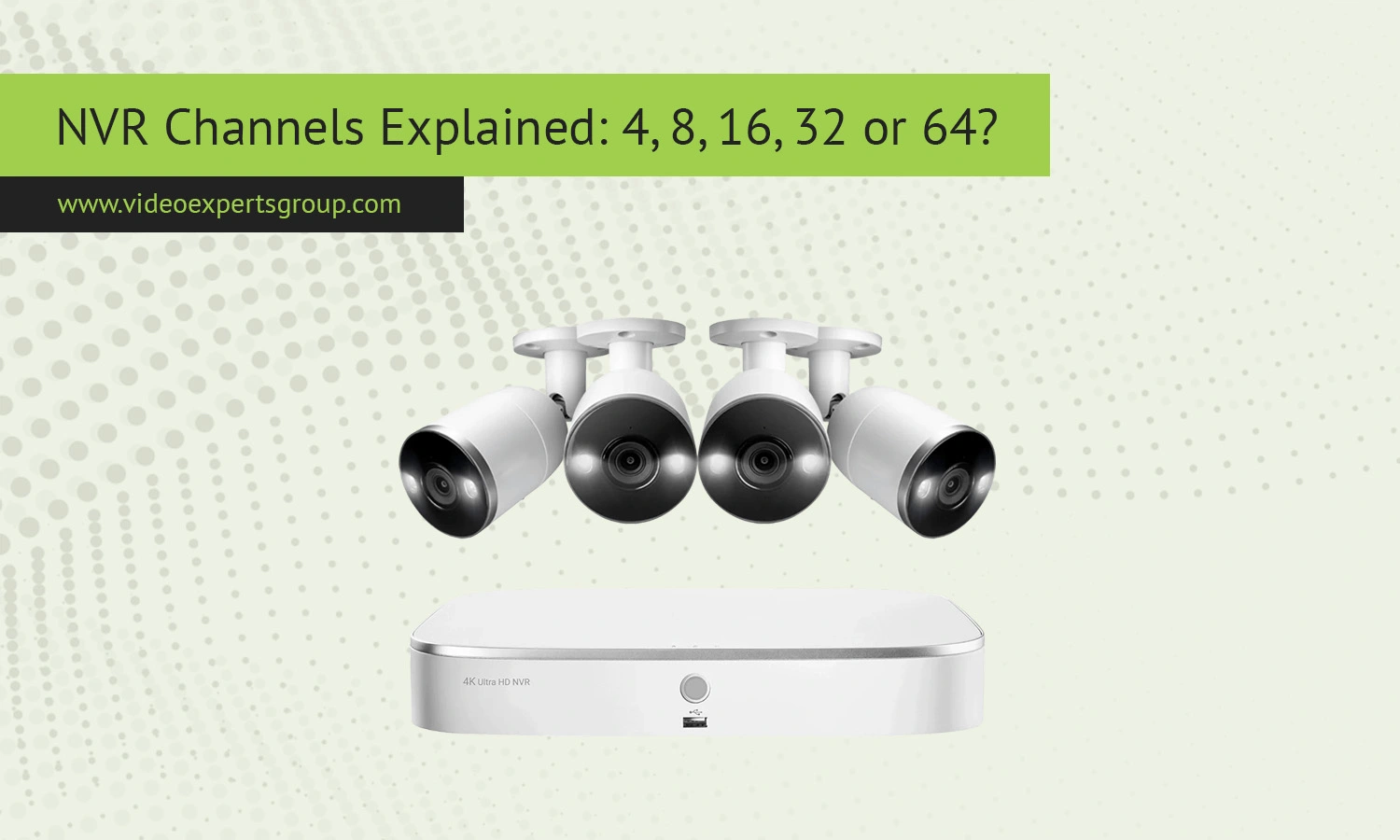
Choosing the right Network Video Recorder (NVR) is one of the most important decisions when building a CCTV system. Many buyers focus only on camera resolution or storage size, but the number of NVR channels often determines how flexible, reliable, and future-proof the entire surveillance setup will be.
Whether you are securing a small apartment, a retail store, a warehouse, or a large industrial facility, understanding NVR channels helps avoid expensive mistakes. Buying too few channels limits expansion. Buying too many can increase costs without delivering practical benefits.
Modern NVRs are available in many configurations, including 4, 8, 16, 32, and 64-channel models. Each category targets different environments and workloads. Some are designed for simple plug-and-play home surveillance, while others support enterprise-grade monitoring with dozens of high-resolution IP cameras operating around the clock.
This guide explains what NVR channels really mean, how channel capacity affects performance, and which type of NVR is best for different situations.
What is an NVR Channel?
An NVR channel is a virtual input assigned to a single IP camera stream. Unlike older DVR systems that relied on physical coaxial cable inputs, NVR channels work over a network connection.
Each camera transmits digital video data through Ethernet or Wi-Fi to the NVR. The recorder processes, compresses, stores, and displays those streams in real time. If the NVR supports 8 channels, it means the system can actively handle up to eight independent camera feeds.
Most modern NVRs also support additional functions per channel, including:
- Motion detection
- Human and vehicle recognition
- Smart playback filtering
- Audio recording
- Remote mobile viewing
- Event notifications
- AI analytics
Channel usage becomes more demanding as camera resolution increases. A single 4K camera requires significantly more processing power and bandwidth than a standard 1080p camera. Because of this, the actual practical limit of an NVR depends not only on channel count but also on total incoming bitrate capacity.
For example, an 8-channel NVR with limited throughput may struggle if all cameras record in 4K at high frame rates simultaneously.
4-Channel NVRs: The Entry-Level Option
4-channel NVRs are the smallest and most affordable category commonly used in residential surveillance systems.
Best For:
- Apartments
- Small homes
- Garages
- Tiny retail kiosks
- Small offices
- Basic front-door monitoring
Most users install cameras at entry points, driveways, backyards, and interior hallways. Four cameras are often enough for straightforward coverage in compact spaces.
Key Advantage:
The biggest advantage of a 4-channel NVR is simplicity. Installation is usually fast, setup is beginner-friendly, and the total hardware cost remains relatively low.
Many 4-channel models include integrated PoE ports, allowing cameras to receive power and network connectivity through a single Ethernet cable. This reduces installation complexity and improves reliability.
Compact NVRs also consume less electricity and generate less heat compared to larger enterprise systems.
Technical Limit:
The main limitation is expansion capacity. Once all four channels are occupied, adding another camera requires replacing the recorder with a larger model.
Another limitation involves processing power. Entry-level NVRs often have lower decoding capability and smaller storage support. Running four high-bitrate 4K cameras with advanced analytics may push cheaper hardware close to its limits.
Storage retention is also shorter because small systems commonly use a single hard drive bay.
8-Channel NVRs: The Versatile Choice
8-channel NVRs are among the most popular surveillance solutions because they balance affordability, flexibility, and future scalability.
Best For:
- Medium-sized homes
- Restaurants
- Convenience stores
- Small warehouses
- Clinics
- Offices with multiple rooms
An 8-camera layout provides more comprehensive coverage while still remaining manageable for non-technical users.
Why it’s Popular:
Many users initially install four or five cameras and keep the remaining channels available for future expansion. This flexibility makes 8-channel NVRs highly practical.
Manufacturers also tend to include better processors, higher bitrate support, and more advanced software features in this category.
In many cases, 8-channel NVRs support:
- 4K recording
- Dual hard drives
- AI smart detection
- Remote multi-user access
- Advanced search functions
- Cloud integration
This category is often considered the sweet spot between consumer and professional surveillance equipment.
Network Impact:
As camera quantity increases, network traffic becomes more important. Eight simultaneous HD or 4K streams can consume substantial bandwidth, especially during remote viewing sessions.
Stable gigabit networking is strongly recommended for modern 8-channel systems. Poor switches or outdated routers may create lag, dropped frames, or delayed playback.
Wireless cameras may also introduce instability if signal quality fluctuates.
Storage Note:
Storage demand increases quickly at this level. Eight 4K cameras recording continuously can generate several terabytes of data within days.
Most users either:
- Lower recording bitrate
- Enable motion-only recording
- Use H.265 compression
- Install larger surveillance-grade hard drives
Retention periods depend heavily on recording settings.
16-Channel NVRs: Professional Standards
16-channel NVRs are widely used in professional surveillance environments where reliability and broader coverage are critical.
Best For:
- Schools
- Hotels
- Large offices
- Multi-floor buildings
- Industrial workshops
- Large retail spaces
These systems provide enough capacity to monitor entrances, parking lots, hallways, production zones, storage areas, and public spaces simultaneously.
Capabilities:
Most 16-channel NVRs include stronger processors and significantly higher throughput ratings.
Professional features often include:
- RAID support
- Multiple HDMI outputs
- Advanced user permissions
- AI event filtering
- Facial recognition support
- POS integration
- Centralized management software
Higher-end models may support mixed camera resolutions and advanced video analytics across all channels.
Infrastructure:
A 16-camera system requires more serious infrastructure planning.
Important considerations include:
- Managed PoE switches
- Dedicated surveillance VLANs
- UPS battery backup
- Proper cable management
- Ventilated server racks
- Redundant networking
At this scale, poor infrastructure design can cause major reliability issues.
Redundancy:
Professional installations often prioritize redundancy. If the recorder fails, businesses may lose critical evidence.
Many 16-channel NVRs support:
- RAID storage arrays
- Automatic failover
- Scheduled backups
- NAS integration
- Dual network ports
These features improve system resilience and reduce downtime risks.
32-Channel NVRs: Scaling Up
32-channel NVRs are designed for large surveillance deployments where centralized monitoring becomes essential.
Best For:
- Shopping centers
- Universities
- Distribution warehouses
- Manufacturing plants
- Large apartment complexes
- Logistics facilities
At this level, surveillance systems often become part of broader security operations.
Throughput Matters:
Throughput becomes one of the most critical technical specifications.
A 32-channel NVR may support hundreds of megabits per second of incoming video traffic. High-resolution cameras, especially 4K and 8MP models, place heavy demands on the recorder.
Insufficient throughput causes:
- Recording gaps
- Frame drops
- Playback stuttering
- Delayed live view
- Unstable remote access
Professional-grade CPUs, hardware decoding, and optimized firmware become extremely important.
Management:
Managing dozens of cameras manually becomes difficult without advanced software tools.
Many 32-channel systems include:
- Centralized dashboards
- Camera grouping
- Event prioritization
- Smart search filters
- Heat mapping
- AI detection rules
- Multi-site integration
Security teams often monitor these systems from dedicated control rooms.
64-Channel (and Beyond): Enterprise Solutions
64-channel NVRs and larger systems belong to the enterprise surveillance category.
Best For:
- Airports
- Smart cities
- Stadiums
- Government facilities
- Transportation hubs
- Corporate campuses
- Critical infrastructure sites
Enterprise surveillance may involve hundreds or even thousands of cameras distributed across multiple locations.
Server-Grade Hardware:
Enterprise NVRs often resemble dedicated servers rather than consumer electronics.
They may include:
- Xeon-class processors
- ECC memory
- SSD caching
- Massive RAID arrays
- Redundant power supplies
- Hot-swappable drives
Performance requirements are far higher because the system must continuously process enormous amounts of video data.
High Availability:
Downtime is unacceptable in enterprise environments.
High-availability features may include:
- Active-passive failover clusters
- Distributed recording servers
- Automatic database replication
- Geographic redundancy
- Load balancing
These systems are designed to maintain continuous operation even during hardware failure.
Integration:
Large NVR platforms are frequently integrated with:
- Access control systems
- License plate recognition
- Alarm systems
- Building management platforms
- AI analytics engines
- Cloud monitoring services
Enterprise surveillance is no longer just video recording. It is part of a larger security ecosystem.
Crucial Factors Beyond the Number of Channels
Many buyers assume that channel count alone determines NVR quality. In reality, several other specifications are equally important.
Key factors include:
- Incoming bitrate capacity
- Video compression support
- Maximum recording resolution
- Hard drive bays
- RAID functionality
- AI processing capability
- Remote access stability
- Mobile app quality
- Cybersecurity protections
For example, a cheap 16-channel NVR may perform worse than a premium 8-channel model if the processor is weak or firmware optimization is poor.
Cybersecurity also matters. NVRs connected to the internet should support strong password policies, firmware updates, encryption, and user access management.
Scalability: Thinking Ahead
One of the most common surveillance mistakes is buying an NVR with no room for expansion.
Many users initially install only a few cameras but later decide to add:
- Parking lot coverage
- Indoor monitoring
- Additional entrances
- License plate cameras
- Warehouse cameras
Replacing an undersized NVR later increases costs and complicates migration.
As a general rule, many professionals recommend choosing an NVR with at least 25% to 50% more channel capacity than currently needed.
An 8-channel NVR may be smarter than a 4-channel model even if only four cameras are planned initially.
Common Myths About NVR Channels
Myth 1: More channels always mean better performance.
A larger channel count does not automatically guarantee better hardware quality. Throughput and processor performance matter more.
Myth 2: Every channel supports full 4K recording.
Some low-cost NVRs advertise high channel counts but limit resolution or frame rates when all channels are active.
Myth 3: Wi-Fi cameras reduce NVR workload.
Wireless cameras still consume bandwidth and processing resources.
Myth 4: Storage size is unrelated to channel count.
Adding more cameras dramatically increases storage requirements.
Myth 5: Home users never need more than four channels.
Modern homes often benefit from wider coverage, especially when monitoring garages, backyards, driveways, and smart entry systems.
FAQs
